Thursday, April 18, 2019

Appomattox Courthouse


Who loves having his picture taken?
Not this guy.
You can see why I always sneak up from behind


Where we encountered the ghost...Becky and I
heard footsteps right behind us as we walked down this remote roadway....counting birds and enjoying the beauty
We thought it was the boss who had gone farther than we did toward some monuments
he wanted to see.
We both heard the loud, crunching footsteps in the gravel, but ignored them for quite a distance...
Until we turned around to find
No One There. 


Does anyone know the story of this tree and gravestone?


from Northview Diary http://bit.ly/2VTFsLg

Freda Yuan: The Sprudge Twenty Interview

Freda Yuan (Photo by Gary Handley)

Welcome to The Sprudge Twenty Interviews presented by Pacific Barista Series. Over the next few weeks, we’ll be featuring our 2019 featured class of Sprudge Twenty honorees, each one changing the coffee game worldwide. For a complete list of 2019 Sprudge Twenty honorees please visit sprudge.com/twenty.

Freda Yuan is an accomplished coffee professional based in London. She is the Head of Coffee at Origin Coffee Roasters; a two-time UK Cup Tasters Champion, placing 3rd in the world at the World Cup Tasters Championship in 2017; a licensed Q Grader and SCA educator in both English and Mandarin; and an MBA from Middlesex University. Yuan has worked many roles throughout her coffee career and has been a vocal champion for recovery and advocacy related to eating disorders.

Nominated by Cat O’Shea

What issue in coffee do you care about most?

Substantiality of the coffee business and coffee supply chain especially from farm and environmental perspectives.

What cause or element in coffee drives you?

Sensory and connection with people. I suffered from bulimia and depression before. Through tasting coffee, it increased my self-awareness in not just tasting but also other elements in life. It also helps me to recover from the conditions and now engage with more like-minded people.

What issue in coffee do you think is critically overlooked?

Sugar, milk, and decaf. I personally think people should enjoy whatever coffees they like. The specialty coffee industry is still too small. To be able to expand to broader audience, we should be more approachable to the general public.

What is the quality you like best about coffee?

Sweetness. I always look for sweet and balanced coffee when I source. It’s always been my thing.

Did you experience a “god shot” or life-changing moment of coffee revelation early in your career?

I dialed-in one decaf coffee in my early barista life. The espresso was really sweet and juicy. That is when I realized decaf coffee can be good, too.

What is your idea of coffee happiness?

It is when we are not distracted by phones or any other conversation with friends, but just stop for moment and truly focus on the cup of coffee in our hands. The story behind that moment can be one of hardship—hardship of producing, roasting, and brewing—but this is what helps make the coffee truly stand out.

If you could have any job in the coffee industry, what would it be and why?

I am the head of coffee of Origin Coffee Roasters in UK. I am very proud to say that it is my current dream job. Not only that I source quality coffees for Origin, I also set up many internal and external educational events to encourage everyone to pursue their passions.

Who are your coffee heroes?

Anette Moldvaer and Sara Morrocchi. They both are doing some incredible work at origin.

If you could drink coffee with anyone, living or dead, who would it be and why?

Eckhart Tolle. His books make me understand and appreciate life more.

If you didn’t get bit by the coffee bug, what do you think you’d be doing instead?

Maybe restaurant management or textile related work. These were my life before coffee.

Do you have any coffee mentors?

I am really lucky that I was supported by many great coffee people. Sam Langdon from Caravan Coffee Roasters was one of the guys who really saw my talent and took me under his wings.

What do you wish someone would’ve told you when you were first starting out in coffee?

Relax, it is just coffee. This universe is bigger than coffee.

Name three coffee apparatuses you’d take into space with you.

Comandante grinder, Kalita Wave 185 and filters, and Brewista Scale. These are my travel essentials.

Best song to brew coffee to?

Actually I’ve never thought about this! I don’t play music when I brew coffee.

Look into the crystal ball—where do you see yourself in 20 years?

My crystal ball is very murky still. I hope I can contribute more work at origin and do more promoting specialty coffee and mental illness awareness to general public.

What’d you eat for breakfast this morning?

Passionfruit flavored granola with banana and PG Tips tea with Oatly.

When did you last drink coffee?

This morning.

What was it?

Werka Wuri from Caravan.

Thank you. 

The Sprudge Twenty is presented by Pacific Barista Series. For a complete list of 2019 Sprudge Twenty honorees please visit sprudge.com/twenty

Zachary Carlsen is a co-founder and editor at Sprudge Media Network. Read more Zachary Carlsen on Sprudge. 

The post Freda Yuan: The Sprudge Twenty Interview appeared first on Sprudge.


from Sprudge http://bit.ly/2GsMj97

Citing Appropriation, Kickapoo Coffee Announce They Will Change Names

kickapoo coffee roasters cafe milwaukee wisconsin interview sprudge

kickapoo coffee roasters cafe milwaukee wisconsin interview sprudge

Southwest Wisconsin’s Kickapoo Coffee have announced that after 14 years in existence, the specialty coffee roaster will change names. In a statement released yesterday, April 17th, owners TJ Semanchin and Caleb Nicholes cite appropriation as the reason the company has opted for the wholesale change.

According to the press release, Semanchin and Nicholes chose the name Kickapoo when starting their coffee company back in 2005 “with the intention of honoring the place where our business has its roots: the Kickapoo River Valley.” They were at that time unaware that Kickapoo—an Algonquin word meaning “one who goes there, then here”—is also the name of an indigenous people that once inhabited the area. There are currently four tribes in the Native American Kickapoo Nation: the Kickapoo Traditional Tribe of Texas, the Kickapoo Tribe of Oklahoma, the Kickapoo Tribe in Kansas, and the Mexican-Kickapoos.

“Holding onto the name was not consistent with our values,” Semanchin tells Sprudge. “We really started asking ourselves the hard questions within the last year… one question led to another… and once we allowed ourselves to take the blinders off of some willful ignorance, it just seems like something we had to do.”

Per the company’s statement, “Semanchin and Nicholes have apologized directly to the three US-based Kickapoo Tribes, all of which were unaware of the name use until the company reached out last fall, and have shared their decision to change the company’s name with each Tribe’s leadership.” Semanchin tells Sprudge that the coffee company has a face-to-face meeting with the leadership of the Kickapoo Tribe of Oklahoma in the coming weeks as part of an ongoing conversation with the different tribes. The point of these conversations, according to Semanchin, is to own up to their mistake and keep the lines of communication open. Semanchin goes on to make clear that the company isn’t seeking any labor, emotional or physical, from the Kickapoo Nation: “we know this is our problem not [theirs].”

The new name for the coffee company has yet to be decided and is expected to roll out in early 2020. According to the press release, the new name will seek to accomplish Semanchin and Nicholes’ original intention in picking the Kickapoo name: “A pride in the place where we live, roast, and raise our families remains at the heart of what we do. Our new name will better reflect this in an honest, authentic, and respectful manner.” Semanchin tells Sprudge that the announcement of the change doesn’t coincide with the rebrand itself to allow their mistake to be seen in its own light. “We didn’t want a new name and marketing blitz gloss over [this issue].”

In an effort to remain transparent about everything associated with the Kickapoo name, Semanchin and Nicholes will be hosting a Q&A session via Instagram Live at 12:00pm CST today, April 18th. The company will also respond to questions, comments, or concerns sent to name@kickapoocoffee.com.

To read the full statement, visit Kickapoo Coffee’s official website.

Zac Cadwalader is the managing editor at Sprudge Media Network and a staff writer based in Dallas. Read more Zac Cadwalader on Sprudge.

Top image via Milwaukee: Inside Scott Lucey’s New Kickapoo Coffee Cafe

The post Citing Appropriation, Kickapoo Coffee Announce They Will Change Names appeared first on Sprudge.


from Sprudge http://bit.ly/2PgSekE

Wednesday, April 17, 2019

The Gables at Nelson Park

The Gables at Nelson Park by Vandwell is a new city home development located in the heart of Vancouver’s West End. This project will offer an exclusive collection of 6 homes, sizes range from 706 – 1,526 sq ft. The Gables at Nelson Park has a wide selection of city homes to choose from!

The post The Gables at Nelson Park appeared first on Vancouver New Condos.


from Projects – Vancouver New Condos http://bit.ly/2VV1cXq

Du Jianing Of China Is The 2019 World Brewers Cup Champion

du jianing china world brewers cup

du jianing china world brewers cup

Du Jianing of China is the 2019 World Brewers Cup Champion. This is Jianing’s first win in three World Brewers Cup appearances, finishing 15th in 2016 and 8th in 2018.

Watching Du Jianing’s winning Finals routine on Sunday, one couldn’t help but feel like you were sitting around her kitchen table or at a practice run in her home shop Uni-Uni Roasters and Bakery in Nanjing (part of former Chinese Barista Champion Jeremy Zhang’s M2M Coffee brand), drinking exceptional coffee while Jianing used you as a sensory judge proxy. Part of this is due to the 10-minute routine itself, where Jianing prepared a fourth cup of her Ninety Plus Gesha Estate coffee for herself to drink with the judges.

But what truly made this feel like a dry run was how flawless it was. No one—and I mean no one, not World Barista Champions, not World Brewers Cup champions, absolutely no one—has a Finals routine that is without even the slightest indicator that they are feeling the weight of the moment. Perhaps it’s a shaky hand showing signs of nerves, often it comes as a script bobble, or maybe it is just a pause that is perhaps too pregnant to be intentional. No one makes it out unscathed. Except Du Jianing.

du jianing china world brewers cup

Her performance, which I have since gone back to rewatch multiple times to find any signs that she is in fact mortal like the rest of us (jury is still out), was completely and utterly without blemish. It was a 10 minutes of casual discussion about intentional, well-thought brewing, delivered as though the grandest prize of them all was not on the line.

For her winning brew, Jianing came equipped with a Gesha variety coffee—roasted just a brief four minutes in an Ikawa sample roaster—that she pre-ground off-stage. This was not due to any sort of time constraint; anyone who saw Jianing’s routine knows that she could have calmly fit 15 minutes worth of performance into the tight 10-minute window the Brewers Cup provides. It was due simply to the complexity of her grind. Jianing opted to grind her coffee twice: once as a coarse ground after which the chaff was removed to promote flavor clarity and then ground again to a smaller size. This, according to Jianing, produces particles sizes that are “more evenly distributed.”

du jianing china world brewers cup

With coffee in tow, Jianing opted to brew through the Origami Dripper, a new device whose shape draws inspiration from the flatbed Kalita Wave filter, essentially eliminating the air insulation normally created between the circular brewing device and the ridged filters. Along with the Taiwanese Brewers Cup Champion Shih Yuan Hsu, Jianing was one of two Finalists to use this brew method, doing so because the thinner paper and large opening at the bottom of the brewer are such that “water can go through the coffee quickly and achieve clarity of flavor.”

The flavor produced was punctuated by floral and apricot notes throughout, beginning with the floral, apricot, cacao, and whipped cream aroma that presented on the palate as apricot, white grape, cacao, champagne, and delicate florals, and finishing with a lingering aftertaste of white wine and apricot. It was a brew that Jianing describes wonderfully (and the best coffee description I think I’ve ever heard) as “round and elegant like a cello concert.”

du jianing china world brewers cup

du jianing china world brewers cup

Beyond flavor calls, it was the easy precision of Jianing’s routine that impressed both onlookers and judges alike. Not only was she  intentionally oscillating pour rates from six grams per second to four and then up to five, but she was providing judges with real time information via iPad to check her work. Counter Culture’s Kathy Altamirano, a sensory judge during Jianing’s Finals performance, explains the high-stakes game the Chines Brewers Cup Champion was playing: “Her presentation was the vision of transparency. She provided us with time, temperature, and flow rate readings in real time for each brew, which is a huge risk if you make a mistake on stage.”

Which, of course, she didn’t.

du jianing china world brewers cup

2018 World Brewers Cup Champion Emi Fukahori presents Jianing with the first place trophy.

But perhaps the most striking thing in Jianing’s exacting performance was not what it included, but what it didn’t: information about the coffee itself. While most scripts will devote a majority of their 10 minutes to discussing the interesting or experimental facets of the coffee they are using, Jianing’s routine was notably light. Yes, we learned it was a Nintey Plus Gesha Estates coffee grown at 1,600 MASL that used local bacteria during fermentation, but that’s it. That’s not a Cliff’s Notes version of the information; that’s all of it. You’d have to have foreknowledge of Ninety Plus or do research on your own even to come up with Ethiopia as the country of origin. And while I can’t with 100% assurance say this wasn’t some sort of misstep—though were it a misstep it would bring the grand total to one, so it’s safe to assume it was intentional—what it did do was place the focus on the coffee she was brewing right then and there. Where it came from, who produced it, what variety it is, what wacky processing method was used during fermentation, these are all important factors for how they helped shape the coffee up to that point.

But this routine wasn’t about the coffee up to that point. It was about the coffee at that very moment, how it tasted on stage at the Finals of the World Brewers Cup Championship in Boston, Massachusetts, thousands of miles away from where it was grown and even further from Jianing’s home in Nanjing. This was a moment not about a coffee’s past, but about its immediate present: being brewed by a world-class coffee professional, to be shared with a panel of expert tasters from around the world, in front of a crowd of hundreds. It was the moment Du Jianing became the 2019 World Brewers Cup Champion.

du jianing china world brewers cup

All of SprudgeLive’s 2019 competition coverage is made possible by Acaia, Baratza, Faema, Cafe Imports, Wilbur Curtis, Third Wave Water, Minor Figures, and Mahlkönig.

In 2019 SprudgeLive is home to the Digital Roasters Village, because it takes a village to cover a barista competition. The Digital Roasters Village features Camber Coffee, Verve Coffee, Partners Coffee, Intelligentsia Coffee, Rishi Tea, Kickapoo Coffee, Blue Bottle Coffee, Onyx Coffee Lab, Creation Coffee, Amavida, and Equator Coffees without whom this work would not be possible.

Zac Cadwalader is the managing editor at Sprudge Media Network and a staff writer based in Dallas. Read more Zac Cadwalader on Sprudge.

Photos by Elizabeth Chai

The post Du Jianing Of China Is The 2019 World Brewers Cup Champion appeared first on Sprudge.


from Sprudge http://bit.ly/2IpnUUd

Who Will Work In British Cafes After Brexit?

For the past couple of years, March 29, 2019 has been known by some in the UK as “Brexit Day,” the historic moment when the country would unmoor itself from the tiresome burden of Europe and float off into a glorious, sun-dappled, immigration-free future.

However, if you’ve been paying attention to the news, or a calendar, you’ll know that Brexit Day has come and gone, with the shambles that is Brexit limping on from extension to humiliating extension. This uncertainty has real-world consequences, one of which is the lack of skilled workers willing to risk moving to the UK when a no-deal, hard-border exit is still a genuine possibility. We’ve covered the impact of Brexit on the British coffee industry before, but since 2017 the issue hasn’t much changed. If anything, it’s become even more muddled. And it may just mean there aren’t enough workers to run the coffee shops.

According to Sky News, Brexit will make it “more difficult to attract applicants from EU countries and that British workers have not yet made up for the shortfall.” And the disparity between foreign-born and home grown workers is significant; Andrea Wareham, an HR manager at Pret a Manger, estimates that “just one in 50 applicants for jobs at the chain are British.” This is amid a bit of a boom in British coffee culture, where the UK coffee shop market grew 7.9% in the previous year, bringing the total value of the industry to £10.1 billion ($13.27 billion). An estimated 6,500 new coffee shops will open over the next four years and will require an additional 40,000 workers.

But the question remains: if there is a no-deal, hard-border Brexit, who will work in British cafes? Skilled European baristas have dozens of friendly cities around Europe with burgeoning specialty coffee scenes would seem a much safer, more hospitable, bet.

This much is certain: come Brexit Halloween, not many will go dressed as baristas.

Fionn Pooler is a journalist based in Ann Arbor, Michigan, and the publisher of The Pourover. Read more Fionn Pooler on Sprudge.

The post Who Will Work In British Cafes After Brexit? appeared first on Sprudge.


from Sprudge http://bit.ly/2IEoY5Y

Tuesday, April 16, 2019

The Very Best Of The 2019 Re:Co Symposium

Emboldened by my trusty press pass, I was lucky enough to get behind the velvet rope at Boston’s 2019 Re:Co event. Whereas Re:Co—an event put on by the Specialty Coffee Association that has often been likened to the Ted Talks of coffee—usually focuses on a variety of subjects relevant to thought leaders in specialty coffee, this year’s event homed in on just one subject: coffee’s C market price crisis.

Attacking the crisis from a multiplicity of angles, the event started at the macro then moved to the micro, moving from producer to consumer and back to producer. The goal of this year’s content was to move ideas toward action; everyone was asked during Re:Co founder Peter Giuliano’s opening remarks to think about their Re:Co pledge, and for the first time, Re:Co attendees were split into interactive group sessions to find and commit to those pledges. There were way too many amazing speakers for me to be able to cover all of them, so to follow the event blow by blow, check out our coverage on Sprudge Live under Re:Co Boston’s official hashtag #RecoBoston. To learn more about the larger themes engaged at Re:Co, read on!

A Key Highlight to Set the Stage

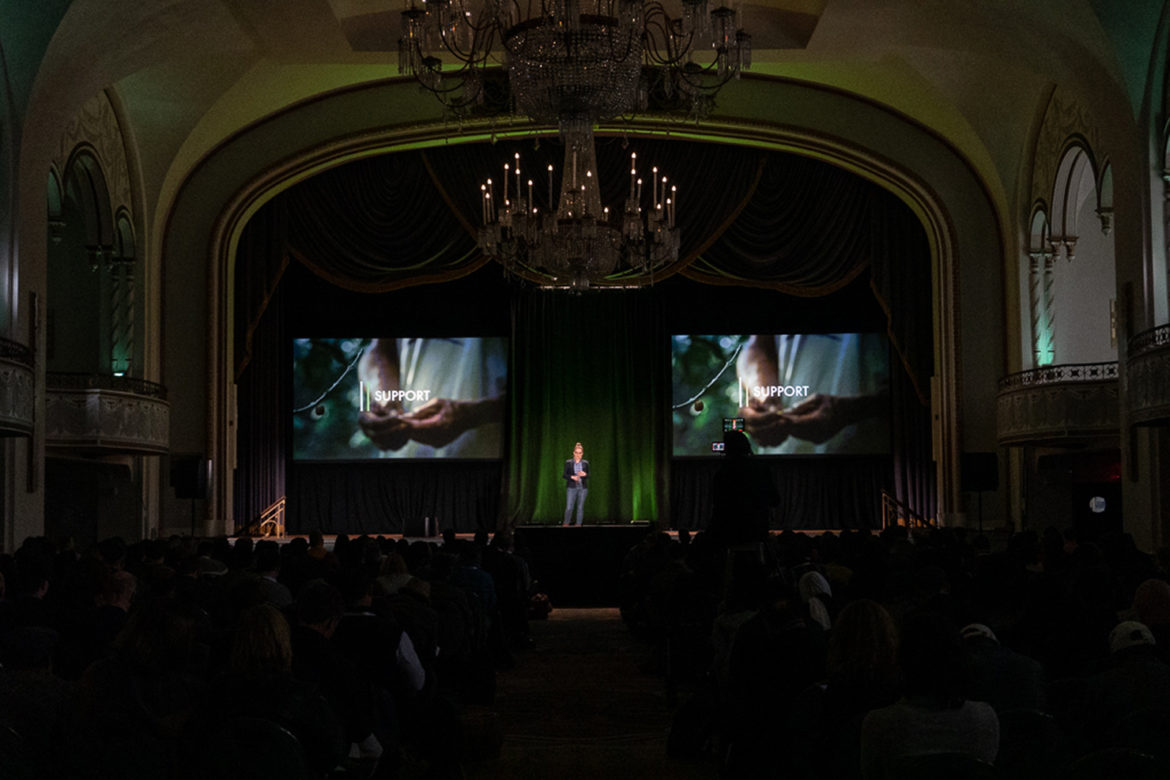
One highlight I want to lead with is the single exit fallacy. Brought to the Re:Co stage by Yale post-doc Janina Grabs, the single exit fallacy starts with an analogy: picture a crowded theater when a fire breaks out. The theater has an emergency exit and people start exiting; the first person gets out fine, as does the second, and the third, but what about the hundredth? This is Grabs’s analogy for using quality differentiation to help farmers exit the C market.

As more farmers try to produce quality coffee that will allow them to differentiate their way to better prices, they incur increased cost of production that cuts into their quality premiums (if they receive as-promised premiums at all). At the same time, the increasing mainstreaming of specialty also means that the concept becomes watered down, making it harder—not easier—for producers to differentiate by producing quality. Grabs’s talk hurt; it laid out an essential failing of the third wave movement, one which few even acknowledge, much less address. By focusing on quality, we’re trying to move select people out of an emergency exit rather than turning on the sprinkler system that would quench the fire, ensuring that all coffee producers make a living wage regardless of the quality of coffee they produce.
The Macro Level

After kicking off the event, Giuliano welcomed former SCA Executive Director Emeritus Ric Rhinehart to the stage to lay out the coffee price crisis as it stands. Using the analogy of the heart condition that led to the heart attack he survived, Rhinehart described the coffee price crisis in similar terms. While the C price’s drop to around a dollar for an extended period of time is indeed a crisis in the same way a heart attack is, it doesn’t happen in a vacuum: the conditions that allowed this to happen are chronic, even as this episode is acute. “We can see that coffee follows a typical boom-bust cycle,” said Rhinehart, displaying a graph of coffee prices over the last 40 years. “This is typical market behavior, but the average price throughout has never adjusted for inflation over 40 years.” So even if the C price were in a more “normal” place, it still wouldn’t have adjusted for cost increases that producers experience.

On the more esoteric side, trade attorney Jeff Glassie dropped some knowledge about how antitrust laws can sometimes constrain organizing around prices. Some things that are illegal under antitrust laws include price fixing (collectively deciding that you will only accept a certain price) and boycotts.

Pushing back on oft-repeated beliefs that are completely unsubstantiated (eg. “we only use 10% of our brains”), Peter David of Enveritas collected mass data on how many coffee farms there really are (that would be 12.5 million, not the oft-cited 28 million). He admonished us to question everything, to be cynical, and to think about how we know what we know.

Discussing market consolidation and hitting us right in the facts with a slate of necessarily depressing statistics, Andrea Olivar of Solidaridad talked to us about the Coffee Barometer, a major market survey on key market trends in coffee, a resource that alerted many to the severity of the crisis. Some salient stats:

  • As an industry, our annual investment in sustainability is under 1%.
  • Only 10% of the value generated by the coffee industry directly reaches producing countries.
  • 55% of global coffee production is certified, but only 20% is actually sold as such.

On Day 2, Peter Roberts of Emory University talked to us about his work on the Specialty Coffee Transaction Guide, a guide that collates prices paid for coffee shared anonymously by coffee buyers. In discussions of taking coffee off the C market, he found that one of the main points of resistance was that people wanted a benchmark, and harmful as it is, the C market does offer that—but, as Roberts said, “Almost any benchmark would be better than the C market. My weight would even be a better benchmark for coffee prices than the C market.” So he’s working on the Transaction Guide, hoping it will act like the World Coffee Producers Forum presented to us “on behalf of all the producers of the world, many of whom couldn’t be here.”

Texas A&M doctoral candidate Taya Brown also discussed issues of profitability, specifically for smallholders in Guatemala. ”I’m sure some of you pay really fair prices for coffee that you buy,” she said, pointing out (similarly to Grabs) that producing quality raises costs. “The issue is that the quality has to be there first.” Brown encouraged us to think about profitability in terms of not just money, but also of knowledge, and to always share knowledge.

Utilizing live translation earpieces for the first time, SCA board member Chad Trewick hosted a multi-language panel featuring Rene Leon Gomez, Herbert Peñalosa, Peter Dupont, and Michelle Bhattacharyya. Gomez laid out some painful statistics, including the fact that the US coffee industry received more money last year than all of 25 million coffee producers in the world. Peñalosa focused heavily on the importance of sharing knowledge; farming is skilled labor, and not everyone has the knowledge toolkit that would allow them to achieve profitability. Dupont discussed how pushes for transparency can look in a retail setting, from writing numbers on walls to printing them on cups. Bhattacharyya talked about her work on establishing a living wage project in the banana industry, and how that experience would benefit the coffee industry by both educating consumers and empowering them to make values-based purchases.

Further emphasizing the role of education and sharing knowledge, Enrique Magana of the Salvadoran miller and exporter Magana Coffee talked about how lack of access to knowledge of best practices hinders farmer profitability.
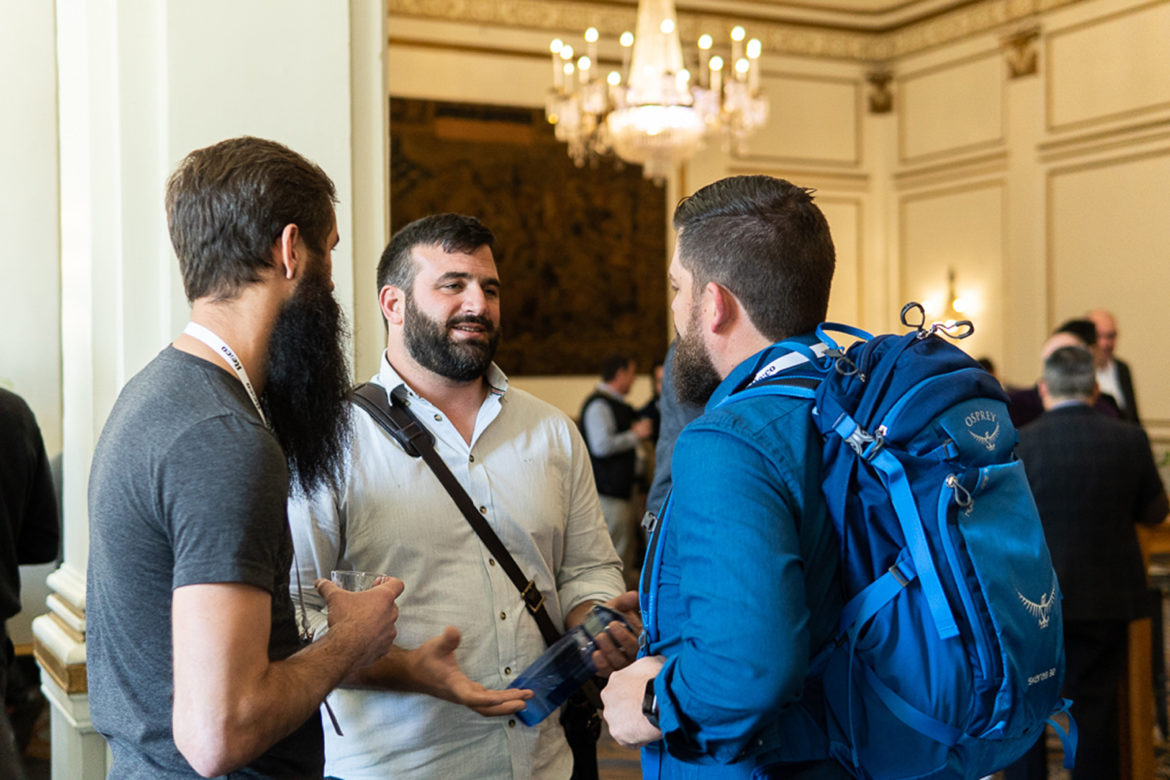
Re:Co attendees talk between sessions.

The Consumer Side

While production is a necessary and fascinating focus of much of Re:Co’s content, I found talks on the consumer side incredibly engaging, featuring stars like Michelle Johnson of The Chocolate Barista, Phyllis Johnson of BD Imports, and Red Bay Coffee founder Keba Konte.

Michelle Johnson started off her talk with an intriguing proposition about a coffee company whose consumer face is recognizable to all of us: “What if I told y’all that there’s someone who’s doing everything specialty is and more? And what if I told you that was McDonald’s.” In 2014, McCafe made a commitment to source all of their coffee sustainably by 2020—and so far, according to Johnson, they’re completely on track. But what does that mean in such a large company? Is it just marketing? According to Johnson, no; McDonald’s actually created their own certification standards that work alongside existing certifications, and goes even further. Michelle Johnson’s session was the talk of Re:Co Boston, showing her range as a speaker and on one of coffee’s biggest stages.

Phyllis Johnson, who hosted the larger session on consumer trends, shared some salient facts about coffee consumption and changing demographics: while white consumers were once the main consumers of coffee (both specialty and commodity), the gap has closed. Now, white gourmet coffee consumption has actually dropped off and ethnic minorities are filling the gap. Black consumers, in particular, are drinking equal amounts of gourmet coffee to white consumers. According to Johnson, these numbers highlight how far specialty coffee has come in terms of diversity—“but we still have a long way to go.” She encouraged us to let go of sameness and rethink the definition of specialty coffee.

Johnson then welcomed Konte onto the stage for a conversation on bringing new groups of people into coffee as workers and consumers. Knowing that an entire workforce and consumer base in Oakland, CA was underserved and underutilized, Red Bay focused on hiring diversely and creating space that truly feels like it’s for everyone. “It’s important to try harder, be more intentional, and get creative,” said Konte, who pulled staff members from a diverse range of industries like chocolate and wine. Discussing the decolonizing work his company seeks to do in coffee, he introduced the nomenclature “value streams” as an alternative to “value chains,” pointing out that “coffee is an industry that, like cotton, is founded on slave labor.” Konte also explained how African Americans can find connection with coffee through its connection to Africa.

Moving us to coffee consumption around the equator, SCA board member Vera Espindola Rafael questioned the term “producing countries” and talked about the thriving cafe and consumer scene in countries that grow coffee, from Brazil to Colombia to Mexico. Not only are consumers there excited about specialty coffee, they’re willing and able to pay for it, and in the case of Mexico, coffee producers make more money and save hassle and energy selling their coffee to local roasting companies. “Specialty coffee is still niche in countries that grow coffee,” said Espindola Rafael. “But coffee retailers are driving new trends and influencing consumers to appreciate the value they add. Can we continue to build on this?”
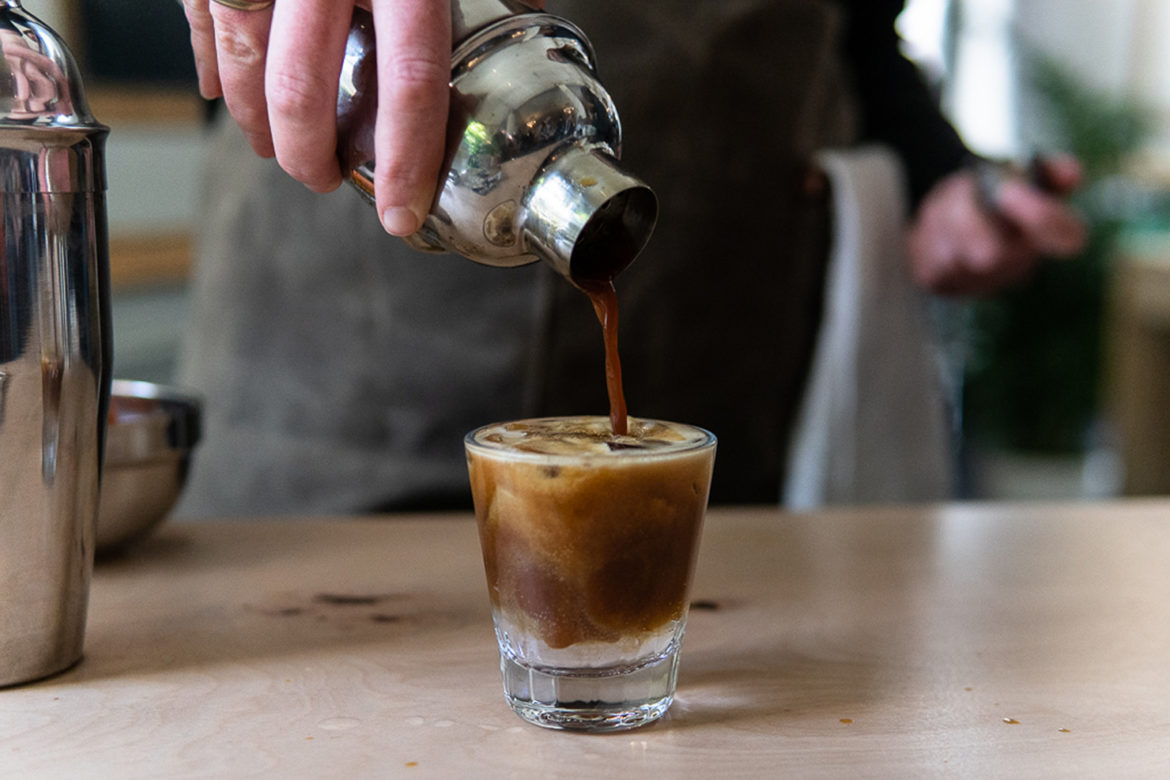
Re:Co volunteers pour drinks for attendees.

Moving Ideas to Action

At the beginning of Re:Co, we were asked to choose between four labels: influencer, thinker, skeptic, and financial mind. In the middle of day two, we were split into interactive change-making sessions with our chosen cohort (in case you were wondering, I’m a skeptic). In these sessions, we looked through our particular lenses and put down pledges that make sense within our personal spheres of influence. To see the pledges taken by various attendees, follow the hashtag #MyRecoPledge.

As I mentioned earlier, this interactive session was a first for Re:Co, and a necessary one. It’s important that people attending an exclusive event like Re:Co use their privilege to drive action and move the industry forward. I was lucky to attend Re:Co, and as Chad Trewick said, “Most of the people affected by the coffee crisis can’t even dream of being here in this room, and we need to sit with that for a minute.” With Browning of Enveritas’s revelation that one in ten coffee farmers will lose a child to hunger this year, there was a definite dissonance inherent to the luxurious banquet hall in which we enjoyed the event and the plentiful food and coffee we had access to.

“What will the future say about us, the coffee industry,” asked Browning. “I think they will say we didn’t do enough.” We as an industry need to move forward in action, even if we don’t know what a comprehensive solution looks like, and Re:Co aimed to push us in that direction. To increase access, Re:Co is releasing talks in both video and podcast form starting next week, so keep an eye out and experience these talks firsthand.

RJ Joseph (@RJ_Sproseph) is a Sprudge staff writer, publisher of The Knockbox, and coffee professional based in the Bay Area. Read more RJ Joseph on Sprudge Media Network.

Photos by Michelle Johnson for Sprudge.

The post The Very Best Of The 2019 Re:Co Symposium appeared first on Sprudge.


from Sprudge http://bit.ly/2GpJi9H