Monday, March 4, 2019

Elena Liao of Manhattan’s Té Company: The Sprudge Tea Interview

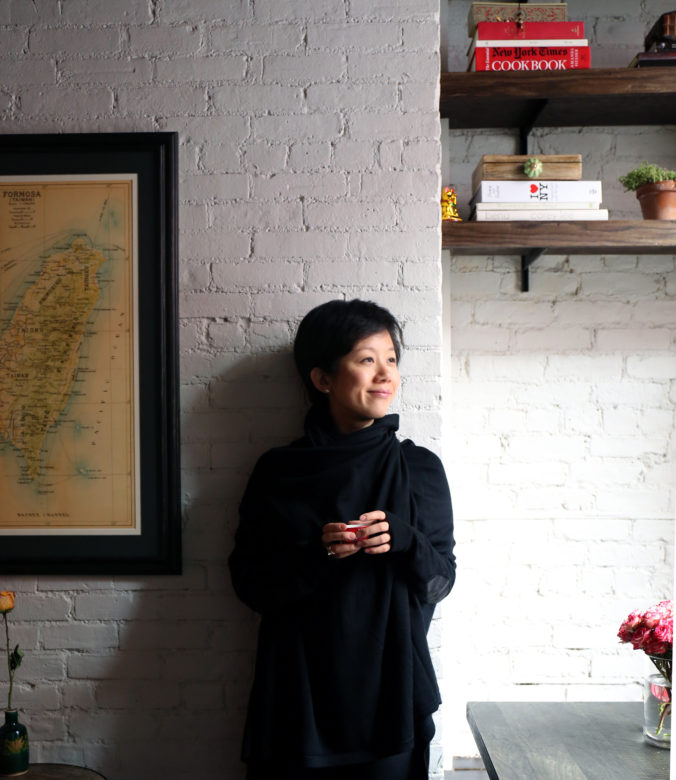
Té Company—Elena Liao’s serene, focused townhouse of Taiwanese teas in the heart of the West Village—isn’t just one of the best tea bars in New York, though it certainly is that. For someone like me, who grew up drinking bags of Lipton, this place feels like a portal to another world. In lost afternoon sessions spent steeping the leaves in quiet contemplation, or tea-stoned giggle fests over pots with friends, I look forward to visiting here whenever I’m lucky enough to find an extra few hours in lower Manhattan.

For Tea Week on Sprudge, Té Company is featured in Scott Norton’s authoritative overview of New York’s best progressive tea houses. But I wanted to dig deeper into this space, in particular, and learn more about the person behind it. There are many lovely places to drink tea in New York but nowhere quite like Elena Liao’s Té Company. I hope you enjoy this interview, which was conducted by phone between New York City and Portland, Oregon.

This interview has been edited and condensed for clarity. 
Hi Elena, and thanks so much for speaking with us! Talk a little bit about what you do at Té Company for folks who are unfamiliar with the space.

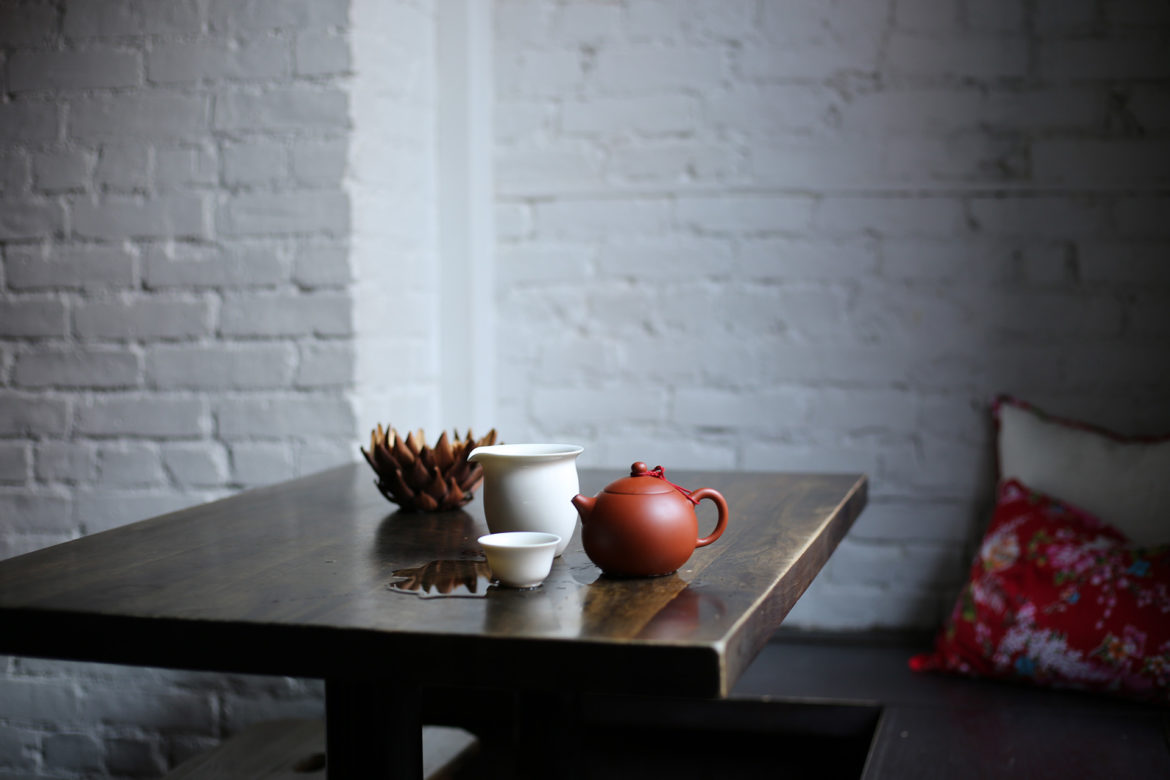
We are a Taiwanese tea house in the West Village of New York. We specialize in Taiwanese tea. If you come in to visit our tea room you could do a few things with us. We offer something as simple as brewing a cup of tea to go, even though most people choose to stay because it’s a nice, relaxing space that feels almost hidden, and that’s hard to find in the New York landscape. Most people choose to sit and wait for a table. Once there, you can enjoy up to three steeps of any tea you choose, from around 25 to 30 different kinds of tea on our menu, plus a few blends we do ourselves (including a few that are caffeine free).

We also have a small food menu, and offer a light lunch between noon and 5:00pm. While you’re in the space, really anything that relates to a tea experience is available to you: you can purchase loose leaf teas to take home, try a flight of teas from our menu, or sit with us to book in advance a private tasting session. In that case, me or one of my staff members will sit with you for an hour or so and try teas together. We’ll drink five different things and talk about them.

What is your professional background? How did the shop get its start?

I don’t have a tea background and neither does my family. I don’t have a hospitality background, either. I worked for an American big box retailer for like a decade, mostly in the merchandise planning world, managing budgets and margin targets for merchants at a huge retailer. That’s my background, and it’s very different from what I do today, although I must say there is something universal about running a store. However, I used to manage a book of business for a fleet of 500 stores, and now I only manage one! It’s different, and the scope is a lot wider, but there’s similarities and there’s a learning curve. Hospitality environments in New York City are different from anywhere else in the world, and when you throw in tea knowledge and sourcing and all of that, it becomes a very different thing.

Honestly, this was a side project I was very curious and interested about, and it just kind of blossomed into what it is today. Actually—I think your readers will appreciate this—I only started to really learn about tea because I was trying to figure out how to make a decent coffee pour-over! This was in like, 2008 maybe, or 2009, and it’s when Blue Bottle was still a young company here in New York, and Intelligentsia was just coming out here too. Coffee felt very new at that time, the idea of a “third wave of coffee” felt so interesting and delicious, and that’s actually how I started learning. I liked the idea of there being so many stories, and so much nuance behind the scenes of it all for this beverage.

But I grew up drinking tea, and that’s part of my family. I’m from Taiwan—everyone drinks tea like it’s water. And after getting into coffee, it made me start to say, “You know, I drink a lot of tea… maybe I should learn about it like how I’m researching coffee, too.” And then I fell into the rabbit hole…
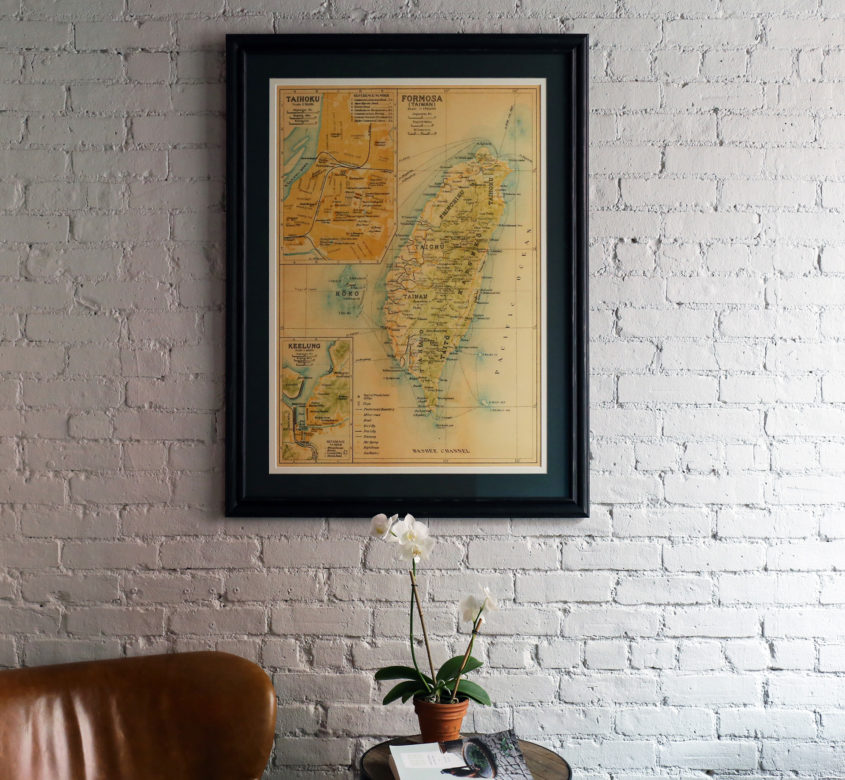
Talk to us more about your connection with Taiwanese tea. Why keep such a tight focus at Té Company? 

You know, when I was learning about tea it was literally just by Googling “what is tea” and oh my goodness—all these different styles come from the same plant? I had no idea! So when I decided to learn about it more, I quickly felt the need to narrow it down with a focus; I felt like for me to deliver something significant in a tea context, I would need to have a lot of focus and intention. In the very beginning, I started by selling teas to restaurants on the side while still working full-time at the time. The more I learned about tea, the more I realized how big it is and how long it would take me to learn even a little bit of everything there was to know. There is no crash course for tea; it is a lifelong learning. But the truth is, if I needed to do something to make me stand out and find a focus, well, I am from Taiwan originally. I still have family there, and they have connections—my grandfather, especially, has a lot of connections to agriculture from in and around the little town he is from, outside Taipei. And so I started there. I said, “You know—I’ll just do Taiwan.”

Most tea companies offer something from every country, and I just felt like there was no way I could do that and say something original, or learn enough to accomplish anything before I was 70! But Taiwan, it just makes sense. I should take advantage of my heritage, you know?

And from there it was just connection after connection. Tea is very much a relationship-based buying process. There are thousands and thousands of small family farmers growing tea in Taiwan alone. That’s more than enough to focus on.

Since opening in 2015, have you noticed a progression in knowledge from your guests? Do you feel like (in New York at least) people are becoming more educated and interested in tea over these last few years?

I definitely think there’s an increased interest, knowledge, and focus being paid to tea right now. In New York, the change has been dramatic. Back in 2009, when I was on Google trying to learn, there wasn’t even really a place to go and find out more, unless you were going to basements in Chinatown or little furniture stores that also happen to broker tea off in the corner. That was what it was like when I was starting. Now people are caring more, there’s more access, and there’s so much more interest being driven through things like third wave coffee bars and the whole matcha trend. We don’t serve matcha at Té Company but I do think it serves as a kind of bridge, connecting coffee drinkers with tea in a very natural way. I think most every coffee shop in New York has matcha now; it’s such an obvious substitute for espresso, and it’s a very easy way for anyone to opt out of coffee while still enjoying a cafe environment.

Matcha makes a bridge, and from there the question comes: “What else is there in tea besides matcha?” That increases awareness and curiosity, and I think it has really contributed to increased interest over the last few years.

At a tea garden in Taiwan, from one of Elena Liao’s recent sourcing trips.

There is an interesting section on your website about the health benefits of tea. Talk to me about that a little bit more—is this something you have experienced in your own life as a tea drinker?

I think for most people, when you ask about healthy tea they’re going to say green tea, first and foremost. The Japanese government has actually commissioned quite a few studies around the health benefits of green tea, and they see it as an angle to sell the product.  For us, on the website, there was so much info we could have included, but we had to narrow it down, and so what you’re reading now is very broad-stroke—and of course we want to be compliant with regulations, and make it clear that any benefits are suggested. We’re not claiming efficacy in any way.

But if you look at Chinese medicine and, well, tea throughout China’s history, tea has its origins as a medicinal plant. Chinese medicine is all about plants and animal parts, and tea consumption comes from a medicinal place. There’s different properties of tea that, when it gets processed differently into white teas, green teas, oolongs etc, impact your body differently. And body type is a part of that. Not everyone benefits the same way, and some have sensitivities.

For me personally, you know, I think I have been conditioned to just accept tea as part of my life in a really intrinsic way. I drink more tea than I do water, and it’s been this way since I was a kid. My mom, when I was an infant, would use tea leaves to rub around my gums before I had a tooth come through, because this was thought to be antibacterial. I have been drinking this stuff since I was an infant, and as an adult I’m constantly dosing myself, so I don’t really know any different. But I do see it with our guests who come in—people really do feel better from drinking tea, for different reasons. It gives them focus, it calms them, it brings a sense of awareness and focus internally. Some dream when they drink tea, whereas they never used to dream. People can almost get a little addicted to it, but I think some of the benefits are certainly obvious.

How much tea do you drink a day on average?

[laughs] That depends! If I’m working in the tea room, probably I’m drinking more. If I’m working at a desk I won’t be drinking as much. But on an ideal day, there is a pot going during breakfast, then a pot going after lunch, and then a new pot going after dinner with dessert or fruit. If I could drink around an ounce of dry tea leaves a day, that would be a great day.
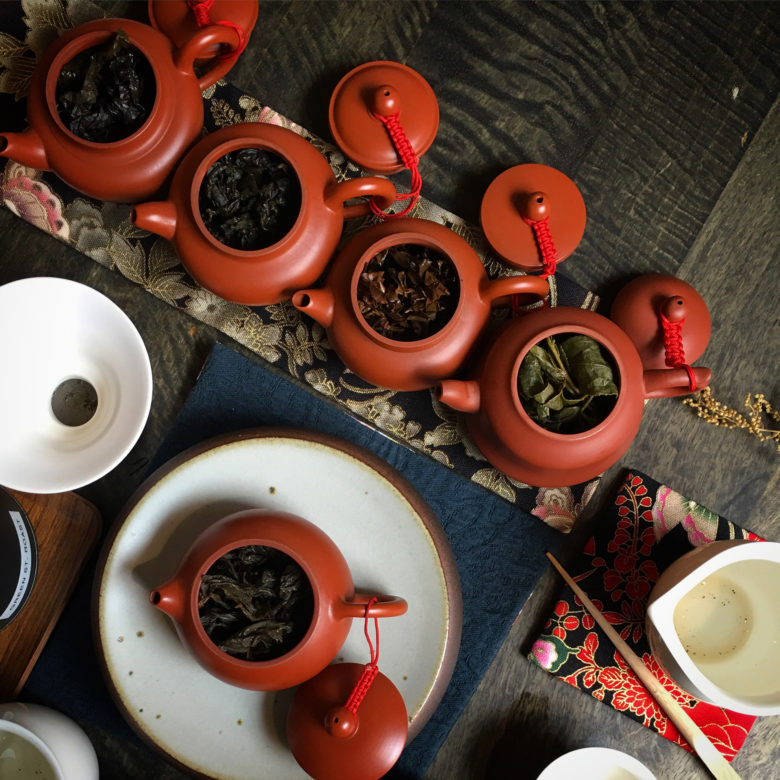
A private tea tasting at Té Company.

You touched briefly on the private tea tasting experience available to guests, but I’m wondering if you can tell our readers more about what they can expect if they book this?

Tea tasting—and really, just the act of sitting with someone to drink tea—is not a very common thing in the United States. I’d say in terms of experience, maybe a wine tasting is the closest thing to it, but generally people don’t know what to expect from this when we offer it.

Basically you sit with us for an hour and a half, or maybe two hours if I’m hosting—I am chatty and I talk a lot about tea—and we try five different teas in sequence. Generally that means maybe two different styles of tea, and some variation within those styles. The foundation of these tastings are educational based, so it’s not so much like, “Do you taste apricot in this brew vs. do you taste grass?” because the truth is, people taste different things. What we had for breakfast, our life experiences, all these things influence how we experience flavor. And so it’s really more about using the opportunity as an education, where we show you photos of where this specific tea was grown, what it looks like, and where it’s made. You get a virtual leaf to cup experience without traveling. We share photos and videos from when I go sourcing, and answer any questions people might have. Oftentimes I’m asked the same question you asked about health benefits; tea is a large and wild world, and I do not know every answer, but we try and make it a very fun and open experience, so if I don’t know something I’ll be there on my phone alongside you looking it up!

And of course, sometimes people just want to drink tea and talk about their cats, and that’s fine too. We have no rigid design to our private tastings. It doesn’t have to be a certain way.

How much time a year do you spend sourcing tea?

I’m gone about a month a year, give or take.
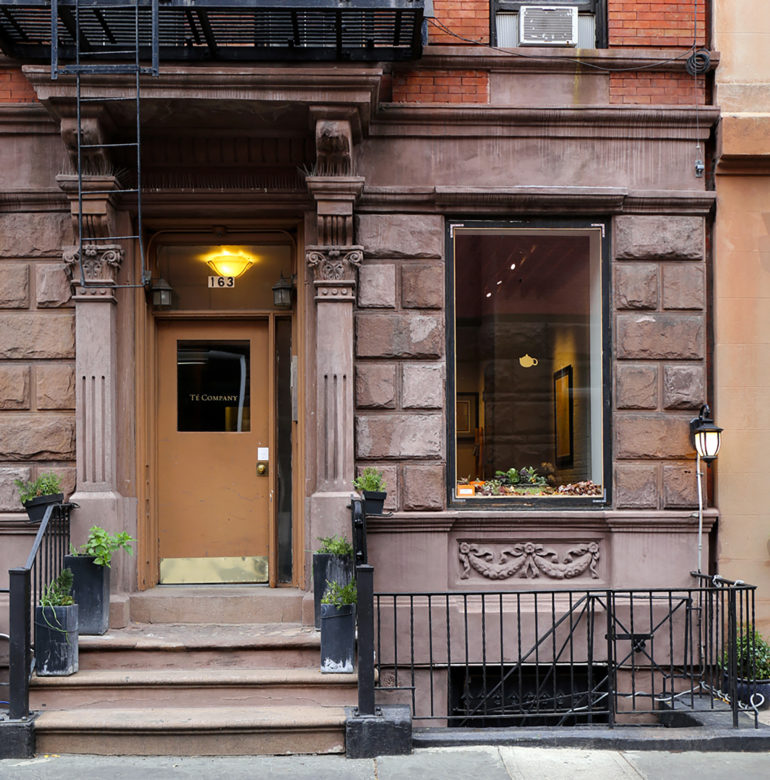
What did this charming building in the West Village used to be?

Most recently it was a vintage cookbook store, and then prior to that it was a lampshade store, and then at some point a record shop where you could smoke weed. When we got in here, it was empty. The building is from 1911.

People are obsessed with your Pineapple Linzer cookies! How did this all come about? What’s the most you’ve ever seen someone buy in one day?

So, the story of the cookie…

In the very early days of Té Company, when I first started thinking about selling brewed tea to public customers, my husband and I would sign up for these outdoor markets. And for the first few that we did, I knew that I wanted something that could help… well, tea can be a little obscure. It’s not as friendly on a pedestal to some people, especially when you’re charging a premium in line with it being a premium product. If you grew up on Lipton tea, it’s not as easy to connect with at first. And so I really just wanted something that would be fun to have as a hook—have a cookie, try some tea.

Pineapple cake is a very common tea snack in Taiwan, and it’s used as a celebratory snack. You can find it in most bakeries, and there’s certain places who are very well known for their version of pineapple cake, which in Taiwan is typically like a cube of butter pastry, soft and crunchy, with pineapple jam inside. My husband has been a chef for many years, so I asked him if he could make something like that. If you visit Taiwan and bring a gift home, it will be some kind of pineapple cake, probably picked up next to all the teas gift boxes they sell at the duty-free. It’s a very common thing.
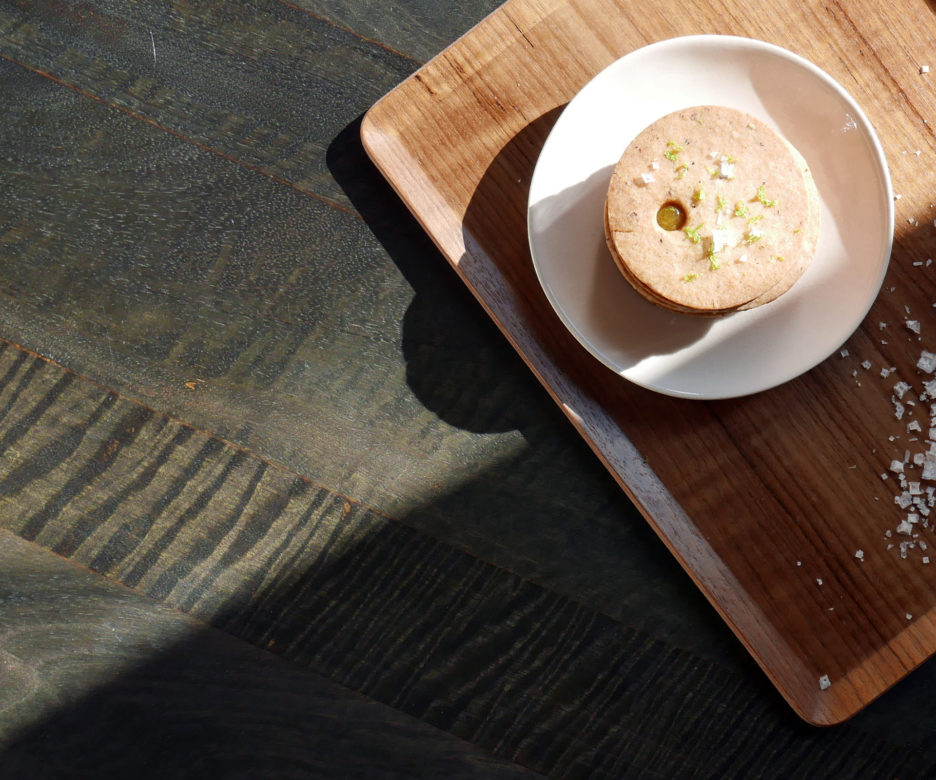
The famed Pineapple Linzer cookie.

And so my husband, he did a few trials and sizes, but ultimately the linzer cookie form was the winning combo, with zest and cook salt. It started for the markets and then just kind of stuck around through us opening the store. It’s become a very important part of our journey.

In the beginning we didn’t make that many a day, maybe just 20? When we first opened nobody even knew where we were, we were very hidden, but then somebody wrote an article and mentioned the cookies and all of a sudden… people started wanting dozens and dozens… and we had people like, throwing temper tantrums or shedding tears because there aren’t enough cookies. I had to give people tissues. I felt bad, it’s like, “I’m sorry—there’s no kitchen attached so we can’t just make more.”

It’s become this kind of modern New York thing, I think—a taste of New York to travel home with or bring your friends.

Yes, absolutely, and as it has gotten more popular now we are a lot more organized. Over the holidays we sold big boxes, and we have a cookie assembly line in the back of the store. People are flying with these back home now from New York all the time.
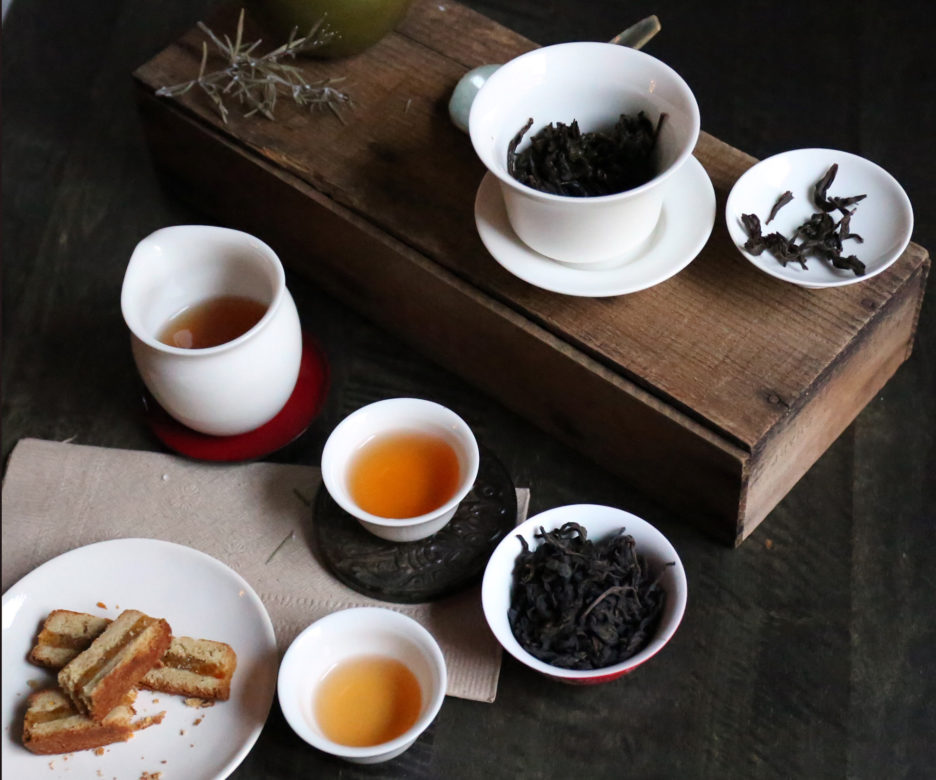
Graceful Hill from Yilan, Taiwan.

Do you have a personal favorite tea? An all-time best, or something you return to year after year?

Yes. It’s called Graceful Hill, and it comes from a tiny town—Yilan—a beautiful town an hour outside Taipei. My parents are from there, and the family that makes the tea is friends with my grandfather. This is the very first tea garden I ever visited, although it’s not a town that’s famous for tea. You do not see these teas at the airport. People kind of don’t really know about it.

It is not an expensive tea, and it is machine harvested—in many ways, on the scale of how you evaluate tea, it is not top of the line. But I grew up drinking it, and until my late 20s it was nearly all I ever drank, and so the flavor of this tea has been imprinted on my brain since I was an infant. I have an emotional connection to this particular tea, and I’m a little afraid that it will go away, honestly. The wife of the family who grows it, she is 80 years old now, and she runs the show. I’m nervous every year that she will stay in good health.  This is the most gulpable and satisfying tea for me to drink anytime, in the shop or just around the house.

As for the rest, all the other teas—it depends! Picking a favorite tea is like picking your favorite child. It depends on the day, and the rest—depends! Greener style oolongs, or roasty oolongs… it’s like picking your children, who do you like most. It depends on the day.

Thank you so much. 

Té Company is located at 163 W 10th St in Manhattan’s West Village. Hours daily from 11am, closed Mondays. Visit their official website and follow Té Company on Instagram.

Jordan Michelman (@suitcasewine) is a co-founder and editor at Sprudge Media Network. Read more Jordan Michelman on Sprudge.

All photos courtesy of Té Company.

Breville Logo

Sprudge Tea Week is presented by Breville USA.

The post Elena Liao of Manhattan’s Té Company: The Sprudge Tea Interview appeared first on Sprudge.


from Sprudge https://ift.tt/2EuwKvC

Actually, That’s A Tisane

Late in 2017, I couldn’t sleep. I was up all night, in fact. After several weeks of sleepless nights, lost in a fog of midnight madness, I decided to try the unthinkable: I give up caffeine. It was early 2018 and still the season of New Year resolutions and self-care regimes so it seemed like a good time to introduce the idea that I, the founder of coffee blog Sprudge, would go caffeine free in 2018.

I experienced about three days of headaches brought on by the withdrawal, but it didn’t take long (and it doesn’t take long for most) to acclimate to life without the stimulant. The only thing missing was the ritual of enjoying a hot beverage in the morning. Fortunately, I live in a city with a lot of cafes with excellent tea programs and those programs tend to have a few caffeine-free alternatives on offer. Indeed, almost every cafe has at least one herbal infusion, a botanical blend, or fruit-forward tisane, and as I continued what would be a seven-month journey of caffeine abstinence, I discovered delicious offerings beyond your run-of-the-mill rosehips or chamomile.

Just don’t call it tea.

While many call the following drinks herbal teas, these are *actually* herbal tisanes. Tea is a plant, Camellia sinensis, and if it’s not from that plant it’s not really tea. This is a pretty simple thing but it is wildly and widely misunderstood, and for tea professionals who do this stuff full time it is deeply frustrating, to which I sympathize.

Tisanes aren’t teas, but they are highly delicious, or at least they can be in the right hands. For the purpose of this guide, we’ll explore a range of beautiful steeping flowers, roots, plants, and fruits served warm and delightfully free of caffeine. I invite you all to correct your friends, tut-tut your family members, and go forth calling the drinks in this guide tisanes—botanical tisanes if you’re feeling especially fancy.

These drinks can be made at home with very little equipment or expertise and are available to purchase on the internet (or in some cases your produce aisle!) but they also get along quite swimmingly with gear from Breville, our sponsors here at Tea Week, whose range of automatic steeping systems seem ready-made for the thirsty tisane lover. For those at home counting, these tisanes are low calorie, vegan, mostly gluten-free*, keto, paleo, South Beach approved, and mostly sugar-free**.

A note about health claims: There are a lot of claims out there about the healthful benefits of ingredients like ginger, turmeric, mint, and many others in the tisanes below. While these are all well and great we’re going to base these suggestions purely on the taste experience and enjoyment factor—not their purported healthfulness.

Produce Aisle Winners

The following tisanes are simple to make and use fresh ingredients that most can find in their local specialty shop, farmers market, or grocery store.

Ginger Root

Ginger is a lovely tisane with a tremendous flavor. It’s a spicy meatball if you’re heavy on the ginger so I encourage you to start out using about a tablespoon per cup of hot water to start and moving up from there. At this point, I jam in as much ginger in my tea-pot as I can.

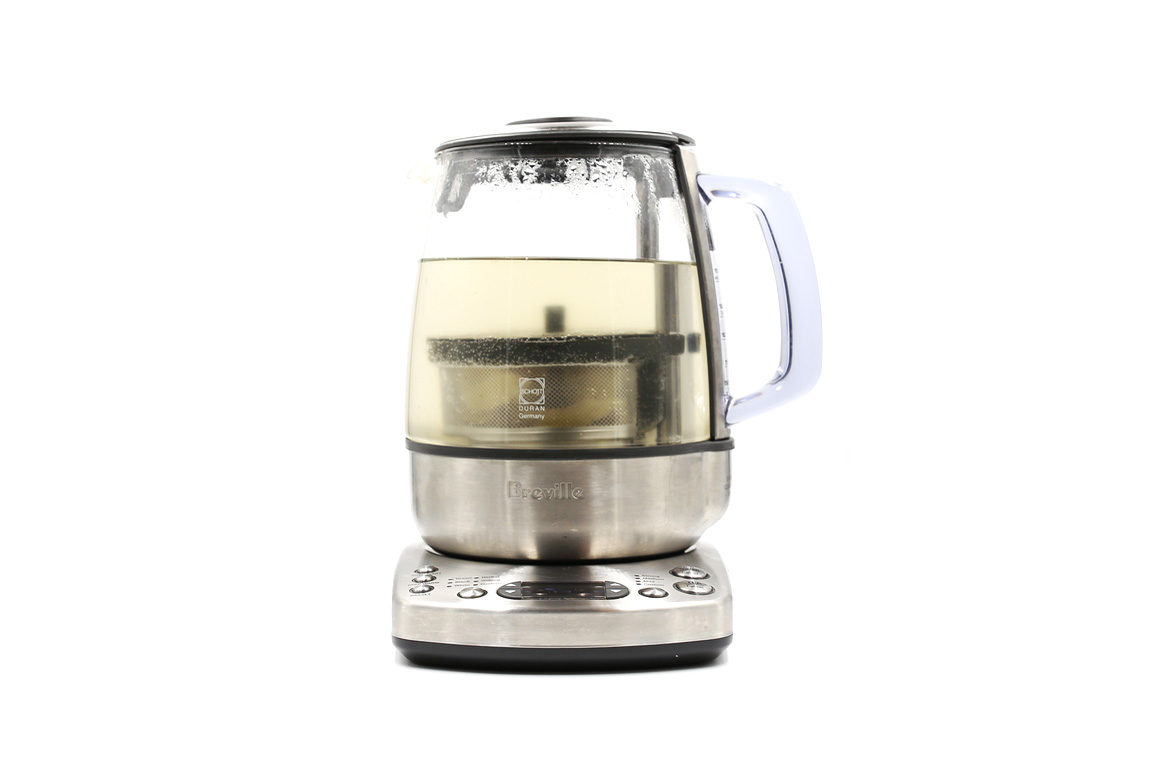
Steeping ginger photographed here in the Breville One-Touch Tea Maker.

Preparation: Carefully peel ginger root and slice into small coins (the smaller, the more infuse-able surface area). Boil water and steep for at least ten minutes. Strain and serve immediately. Wonderful with the addition of lemon and honey.

Hot tip: The Breville One-Touch Tea Maker will infuse ginger root in boiling hot water for 10 minutes at a time.

Fresh Peppermint

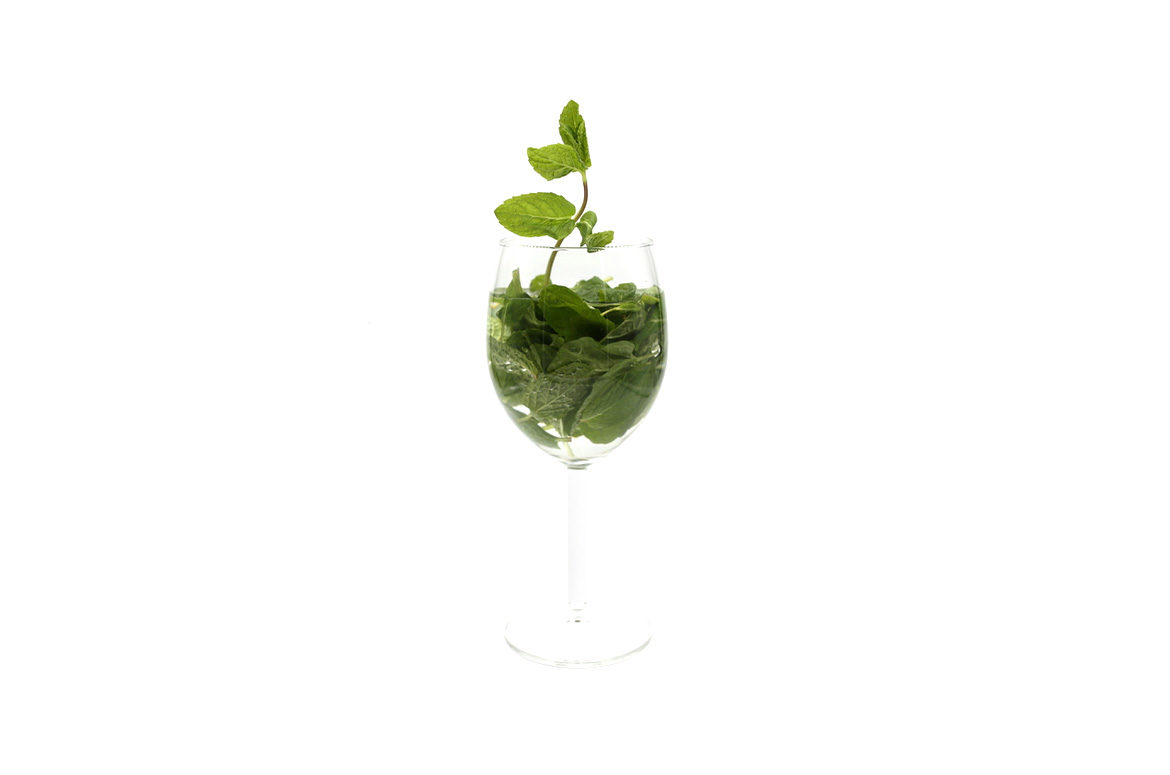
Fresh mint tea is a staple in Amsterdam cafes and couldn’t be simpler: stuffing mint leaves in a glass and steeping them in water. No tea bags or filter necessary! Not only is it a pleasure to drink, it’s also a beautiful presentation.

Preparation: Rinse peppermint leaves thoroughly. Place a considerable amount in a tall tempered glass. Pour boiling hot water over leaves and steep for five minutes. Drink from the glass!

Beautiful Blends

These tisanes are a mix of dried ingredients—most available in grab-and-go sachets or in their loose form.

Organic Turmeric Tonic

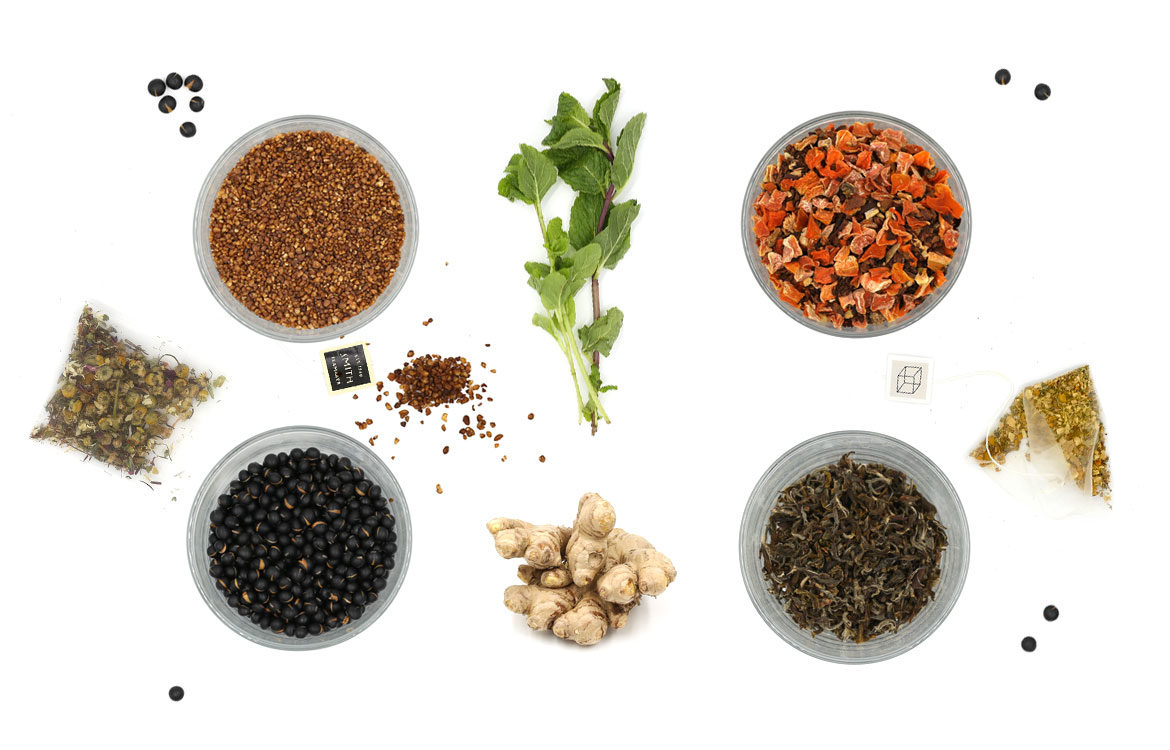
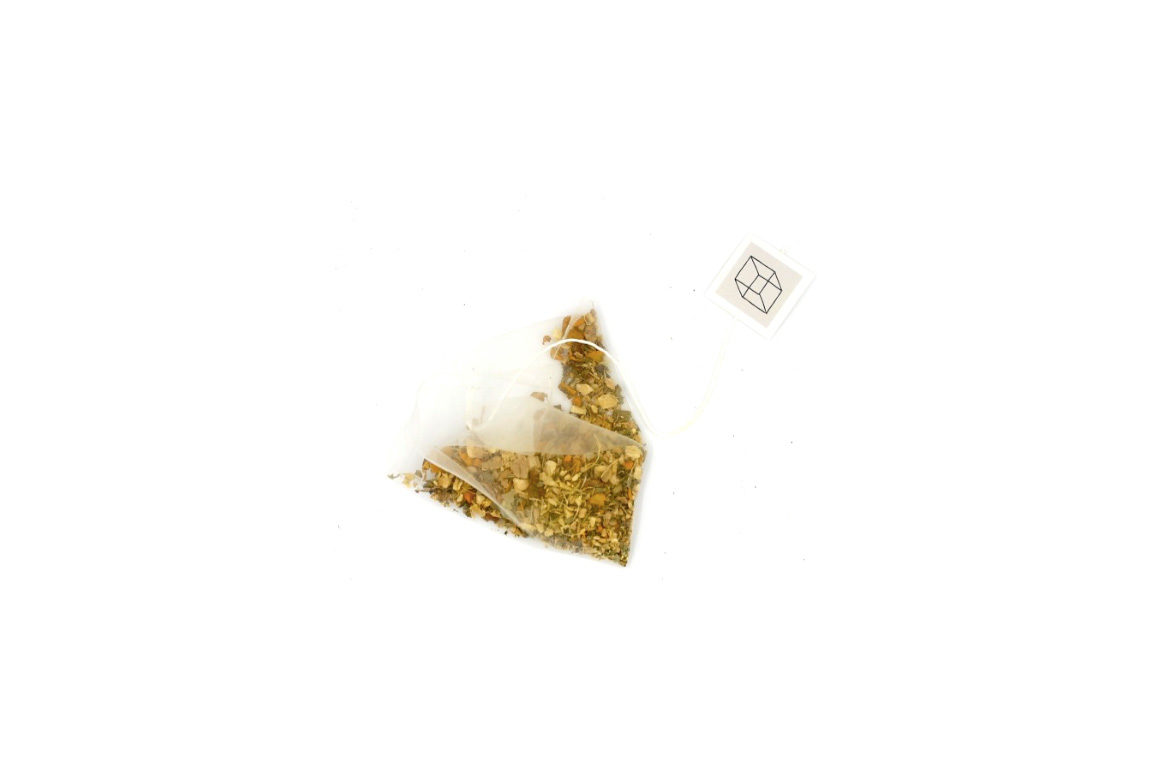
The Organic Turmeric Tonic from Kilogram Tea is a blend of turmeric root, ginger, lemon verbena, licorice root, lemon peel, and citrus oils. It’s warming, spicy, and slightly bitter. The pyramid-shaped filter bags are a nice touch and keep those pesky pieces of roots out of your drink.

Source: Kilogram Tea
Price: $8.99 for fifteen bags. Also available bagless.

Also worth checking out: Rishi Turmeric Ginger, which all but saved my life during a most unpleasant 2016 Winter season.

Blend No. 67: Meadow

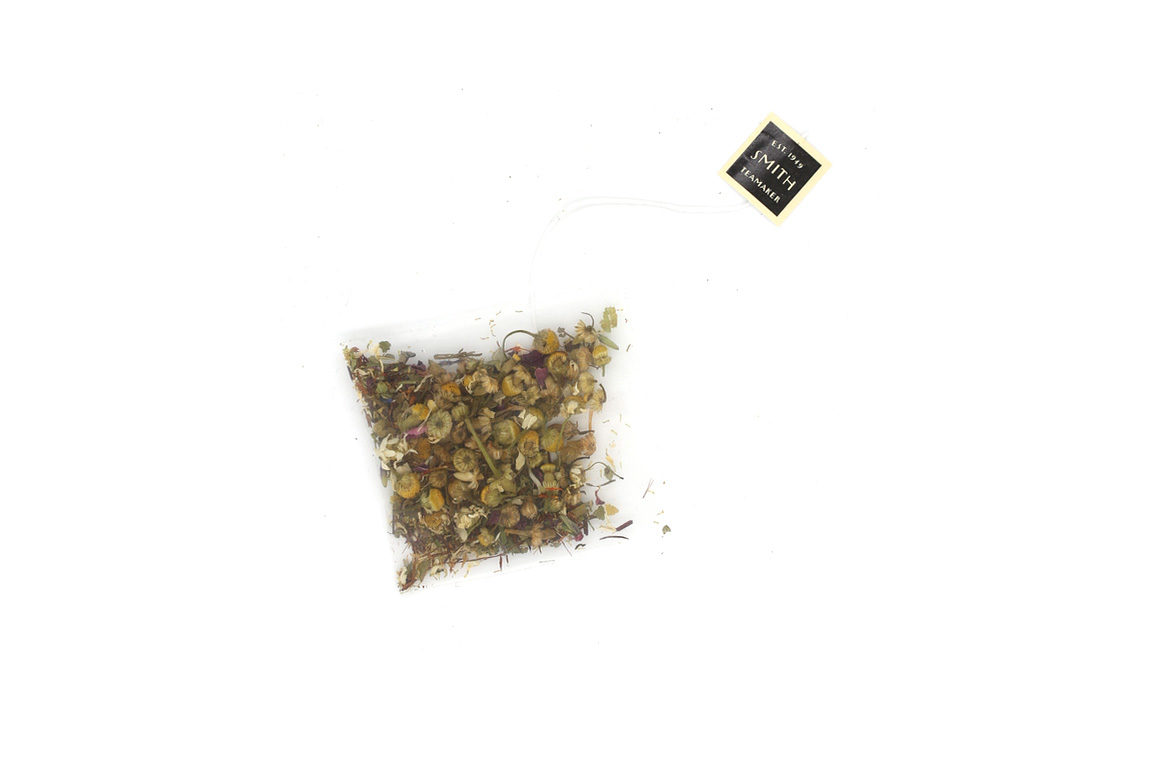
Portland, Oregon’s Steven Smith Teamaker produces this tasty blend of “golden Egyptian chamomile flowers and mildly stimulating, fragrant hyssop joined with smooth Cape rooibos, rose petals and linden flowers.” It has a pleasant mouthfeel and sweetness and a pleasure to steep and re-steep.

Source: Steven Smith Teamaker

Price: $11.99 for 15 sachets. Also available loose.

Carrot

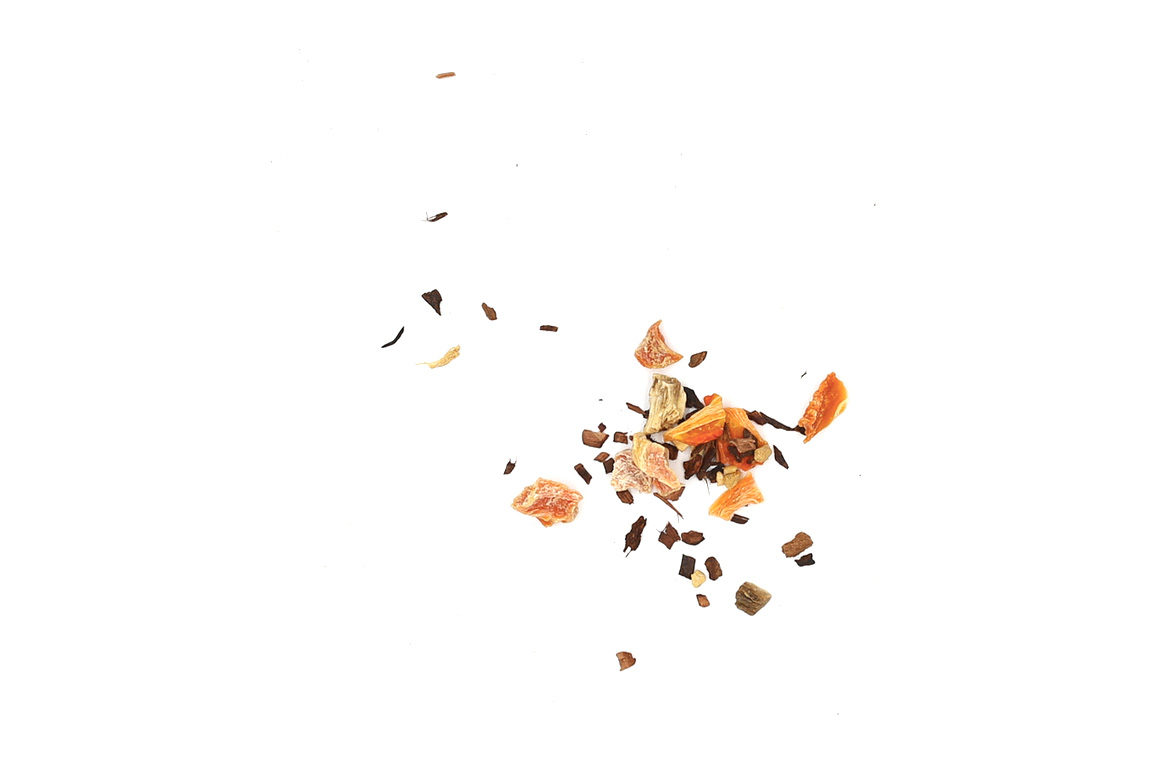
Song Tea in San Francisco creates botanical blends that simulate the profile and visual representation of their traditional teas. Carrot is a “blend of domestic dried carrots and burdock, South African honeybush, Chinese ginger, and Indonesian sweet cinnamon” and has a remarkable fruit quality backed up by the spice of the ginger and cinnamon. Should you come across a coffee bar serving this tisane, it pairs wonderfully with a single-origin espresso shot.

Source: Song Tea
Price: $14 for 120 grams, loose.

Single-Origin Tisanes

These are perhaps the highest-end tisanes on the list in terms of price and scarcity in the US. Available through special importers, the following tisanes aren’t for the faint of heart (but they sure are delicious).

Kettl Nagano Soba Cha 

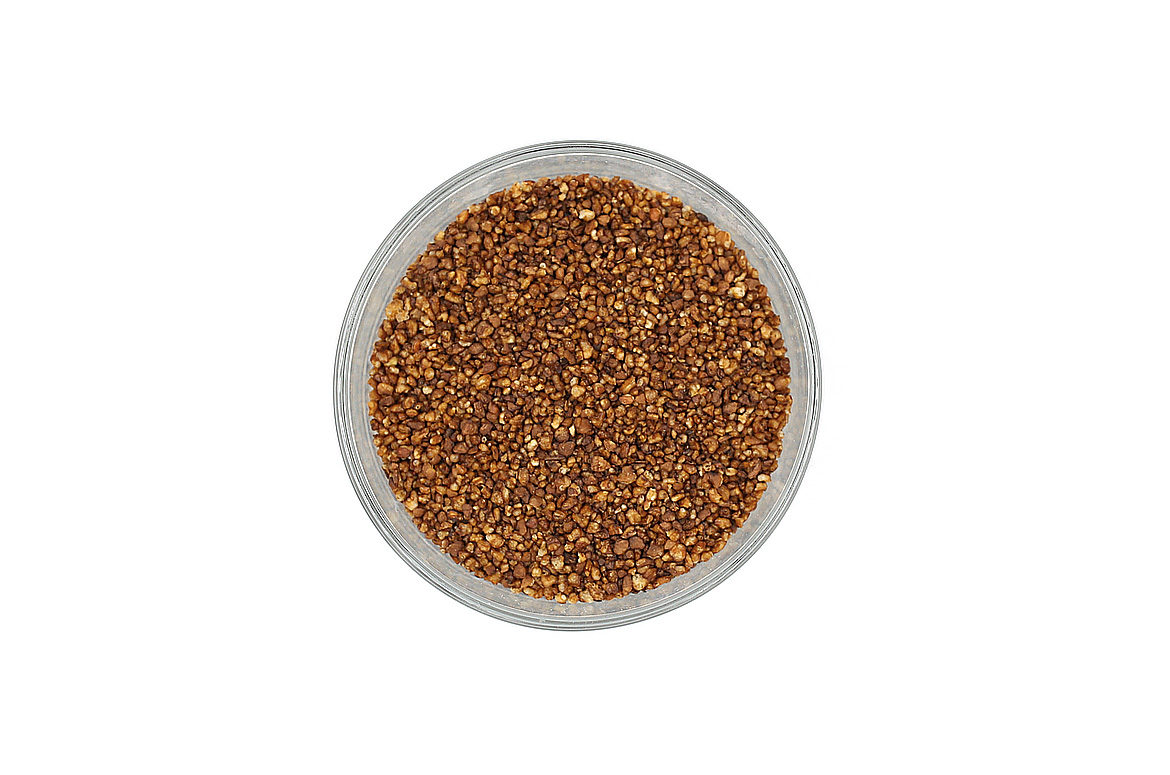
Sugars in the buckwheat kernels caramelize in the toasting process giving this tisane almost a sugar-cereal-in-the-morning flavor but in a really good way. Sourced from Nagano by Kettl, this beverage is one of our favorites.

Preparation: Kettl recommends steeping 5 grams in 200ml of 205ºF water for but a minute.

Source: Kettl
Price: $20/200grams

Roasted Black Soybean

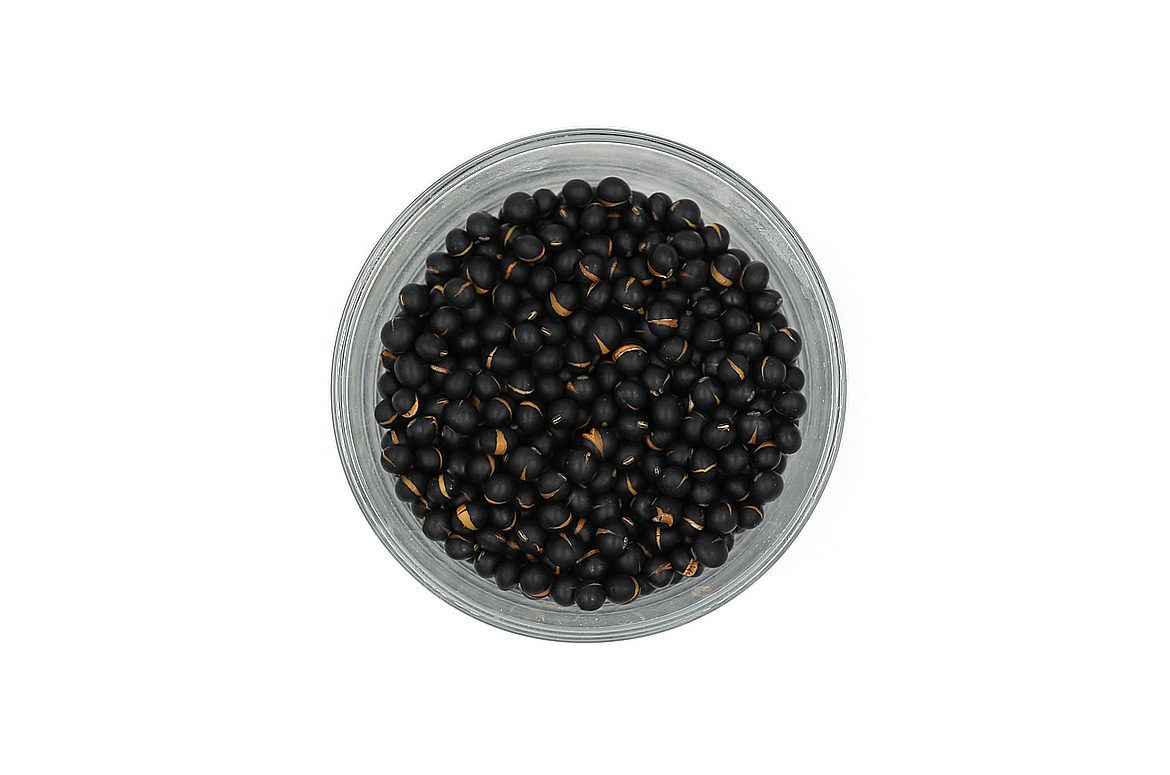
Tea Dealers sells this roasted soybean tisane that also doubles as a snack (the beans can be eaten once they’ve been steeped!) These soybeans are a smaller cultivar known as Sengoku from Hokkaido. The drink is slightly savory and has a nice sweetness.

Preparation: Steep 5 grams in 200ml of 195ºF water for a minute up to three times.

Source: Tea Dealers
Price: $16/100 grams

Wild Persimmon Leaves 

To wrap up this guide I present another offering from Tea Dealers: wild persimmon leaf tisane sourced from Hadong, Korea. The tisane is orange, like the fruit, but has an herbaceous and nutty quality.

Preparation: Steep 5 grams in 180ml of 176ºF water 3-4 times.

Source: Tea Dealers
Price: $38/50 grams

This guide is just the beginning to the many caffeine-free opportunities that exist out there. There are hundreds of herbs, botanicals, roots, leaves, twigs, fruits, and heck, even bones out there to throw in heated water and infuse for one-to-several minutes. Drink up!

Zachary Carlsen is a co-founder and editor at Sprudge Media Network. Read more Zachary Carlsen on Sprudge. 

Breville Logo

Sprudge Tea Week is presented by Breville USA.

The post Actually, That’s A Tisane appeared first on Sprudge.


from Sprudge https://ift.tt/2Te5vPX

The 2019 Sprudge Guide To Buying Tea Online

tea buying guide

tea buying guide

Here it is! The centerpiece of tea week, our sprawling 2019 Tea Week Buying Guide. Please note that this is in no way a “definitive” or “authoritative” guide—rather, it represents a range of tea experiences we’ve had over the last several months of research and experiences for Tea Week. There’s so, so much tea online to drink and learn about, so please consider this but a humble snapshot of the stuff we tried and liked.

No fewer than 17 brands are featured in the pages below, from tea purveyors hailing from Lodz, Poland to Columbus, Ohio to Napa, California to Yunnan, China and all points between. In this guide you’ll find something for everyone, from the thirsty newb to the gushu cultist—teas to open the soul and stagger the mind.

Let’s not waste anymore time on the intro when there’s lovely tea to explore. Dig in and get steeping!

Getting Started

Blend No. 67: Meadow. Photo by Zachary Carlsen.

Smith Tea

I’m a big fan of what they’ve built over the last decade at Smith Teamaker, whose founder, Portland tea entrepreneur Steven Smith, was formerly the mind behind Stash Tea and Tazo (both were acquired by multinationals in the 1990s). Smith passed away in 2015, leaving behind a philanthropic legacy that still resonates today throughout Oregon and beyond. Today Smith Tea is overseen by a team led by Ravi Kroesen, sourcing a kaleidoscopic range of teas and herbal blends from every corner of the globe. There is truly something for everyone at Smith Tea, from a British Brunch blend to chai and herbal tisanes, plus smart selections of teas sourced from India, Japan, Taiwan, and China. Accessibility is the watchword here, and that translates into a very fun tea bar experience at Smith’s two Portland locations—well worth the visit, whether you’re just getting into tea or consider yourself a lifer.

Recommended tea: Smith’s Golden Tippy Assam continues the philanthropic legacy of its founder, with each purchase benefitting Mercy Corps and the SERP program (read more here). It is also, happily, an absolutely delicious expression of this style of northern Indian Assam, with dark cereal malt notes that evoke a good porter beer.

tea buying guide

Garden Direct Huo Shan Yellow. Photo by Zachary Carlsen.

Rishi Tea

Many coffee bars across the United States are partnered with Rishi Tea of Milwaukee, WI, and the brand has been a fixture at coffee trade shows across the country over the last decade. This is a beneficial alliance: Rishi’s selection is vast, encyclopedic even—everything from pre-wrapped sachets to caffeine-free blends to immaculately sourced small lots of tea through their excellent Garden Direct program, a tea geek’s paradise of small lots and specific styles. They’re even selling a few aged pu’er cakes, for eminently reasonable prices, in case that’s where you want to dive in. Truly there is something for everyone at Rishi.

Recommended tea: This 2009 vintage Shou Pu’er from Mannong Village, Yunnan had us steeping and steeping more at Sprudge HQ. There is nothing quite so comfortable as lightly aged shou—a term referring to the wet-piling process that produces big, round, dark flavor notes and a silken mouthfeel. Tea aging is a thing; the different grades and styles and villages of pu’er are also very much a thing. This is a deep rabbit hole to explore and this is a tasty place to start.

Organic Early Spring Snow Sprout. Photo by Anthony Jordan III.

Kilogram Tea

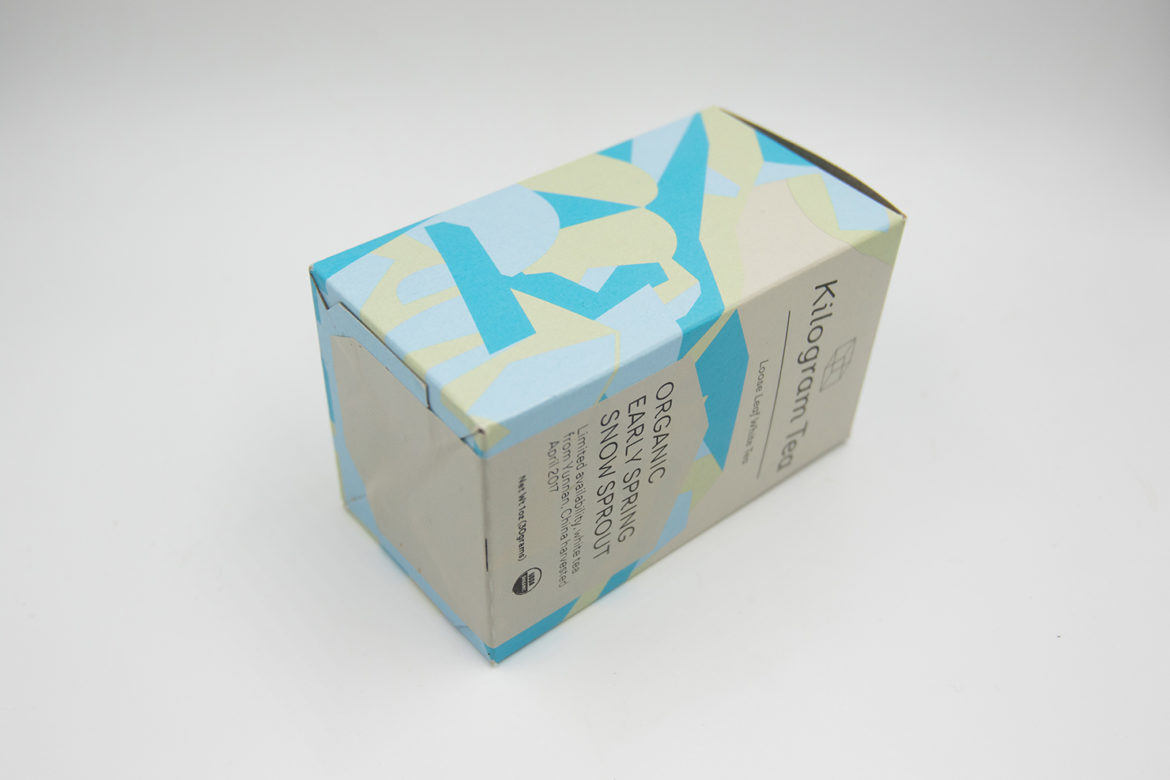
Translating tea into a coffee context comes second nature to Chicago’s Kilogram Tea, founded by longtime Intelligentsia Coffee tea sourcer Doug Palas, and operated out of Intelli’s Fulton Street HQ. Palas is a career tea professional and educator, and I’ve learned a ton from him over the years approaching tea from a coffee context (the regularly updated Kilogram blog offers exemplary tea writing from a trade perspective). Though the range of teas from Kilogram might feel intimidating for newbies—there are seasonal teas, blends for iced teas, teas from Vietnam and China and Japan and much more—Palas hits his spots, walking a fine line between accessibility and inquisitiveness. Particularly notable is Kilogram’s dedication to organic teas, with multiple organic offerings across the product line including White Peony, Iron Goddess of Mercy, and many more.

Recommended tea: Kilogram’s sourcing of Winter Li Shan—lightly oxidized rolled oolong from Nantou, Taiwan—is eminently sessionable, honey sweet and delicious, a tea you want to keep drinking and drinking across multiple steeps. I also strongly recommend ordering Kilogram teas while at any of the Inteillgentsia coffee bars nationwide; having a house tea brand gives these coffee bars envious access to education and quality product, and you can really taste it across the bar as a customer. A shot of espresso and a pot of oolong for me please, thanks.

tea buying guide

Korean Black Balhyocha displayed in shibodashi by Andrzej Bero. Photo by Anthony Jordan III.

Spirit Tea

Spirit Tea of Chicago are making waves right now in the American tea market, with their aggressive pursuit of wholesale cafe accounts and educational focus on tea sourcing and relationship building. In this way, they are the latest iteration of work long pursued by brands like Rishi and Smith: the translation of tea culture into a coffee setting. The end result hopefully sparks new interest in tea among those who work around coffee professionally, or rely on coffee and coffee bars as a daily facet of life. Spirit, with its regular tours and event concepts, represents a kind of millennial take on the trope. This is accessible, cool tea for young people ready to go a step beyond tea bags (or move past bubbles).

Recommended tea: Korean Black Balhyocha is like the perfect dessert tea, with big, sweet, comforting flavors of peanut dust, Hershey’s bar, and sticky rice. This tea grows semi-feral and is sourced from a third generation tea growing family in Hwagae. I can taste it so clearly just writing these words—an extraordinarily piquant and memorable tea.

Wild Korean Persimmon Leaf tisane. Photo by Zachary Carlsen.

Tea Dealers

Tea Dealers of New York City also carry a range of products spanning China, India, Japan, and Korea, including a few high-end Japanese tea bags for those on the front end of the learning curve. We were especially impressed across multiple visits by their tea bar in the East Village (29B)—see more in our coverage of the New York City tea bar scene—and by their wide range of traditional Korean tisanes in flavors like quince, mulberry, and roasted soybean.

Recommended tea: Actually, we’ll suggest one of the tisanes, the wild Korean persimmon leaf (감잎차대 gamnip-cha) grown on an organic farm in the Jiri mountains. This tisane is highly prized for its allergy relief properties—perfect for the coming spring—and tastes beautifully like a lightly oxidative tea. Read more about this and other tisanes in our tisane spotlight feature.

Going Deeper

tea buying guide

Cypress Smoked Wild Leaf. Photo by Zachary Carlsen.

Song Tea

This is the company that started my journey exploring the world of progressive tea, founded by Peter Luong and based in San Francisco. Song is a brand of dualities—they are in the same breath both deeply curated and eminently accessible; rather intimidating yet with a wonderful sort of learner’s permit to the world of quality tea; focused yet hard to encompass in a single sentence or signifier; able to speak fluently to the coffee world yet still reverent for what makes tea special; a company renowned for their tea but on another level altogether when it comes to ceramics, many imported through direct commissions with emerging ceramicists in Taiwan. Every chance to speak with Peter Luong is a chance to learn more, which is why we’ve given him room to talk more about Song’s sourcing efforts elsewhere in our Tea Week collection. Visiting Song Tea has become something of a requirement for me when in San Francisco and I encourage you to do so—Luong’s take on tea service (gong fu cha), like the brand itself, is both unfussy and revelatory, waiting to spark new obsessions for anyone who walks in the door. I’m living proof.

Recommended tea:  As a tea drinker I am forever chasing the tang of a good roasted tieguanyin, and Song’s version of the style—”Red Water Tieguanyin” from Lishan, Taiwan—has become a bar setter for me in terms of quality and deliciousness. That said, it is not a typical Tieguanyin: it comes from Taiwan, not Anxi on the mainland, where the cultivar first came to fame; it is significantly oxidative in what I understand to be a more traditional style on the mainland, where today light, bright TGY’s are more to trend; and it lives for long, hot, repeated steeps, with that moreish apple-skin tang only emerging after three or four rounds. I am obsessed with this tea and it has become to me a kind of definitional totem of all I had been missing in the years before tea became a regular part of my life. There’s simply nothing quite like it.

tea buying guide

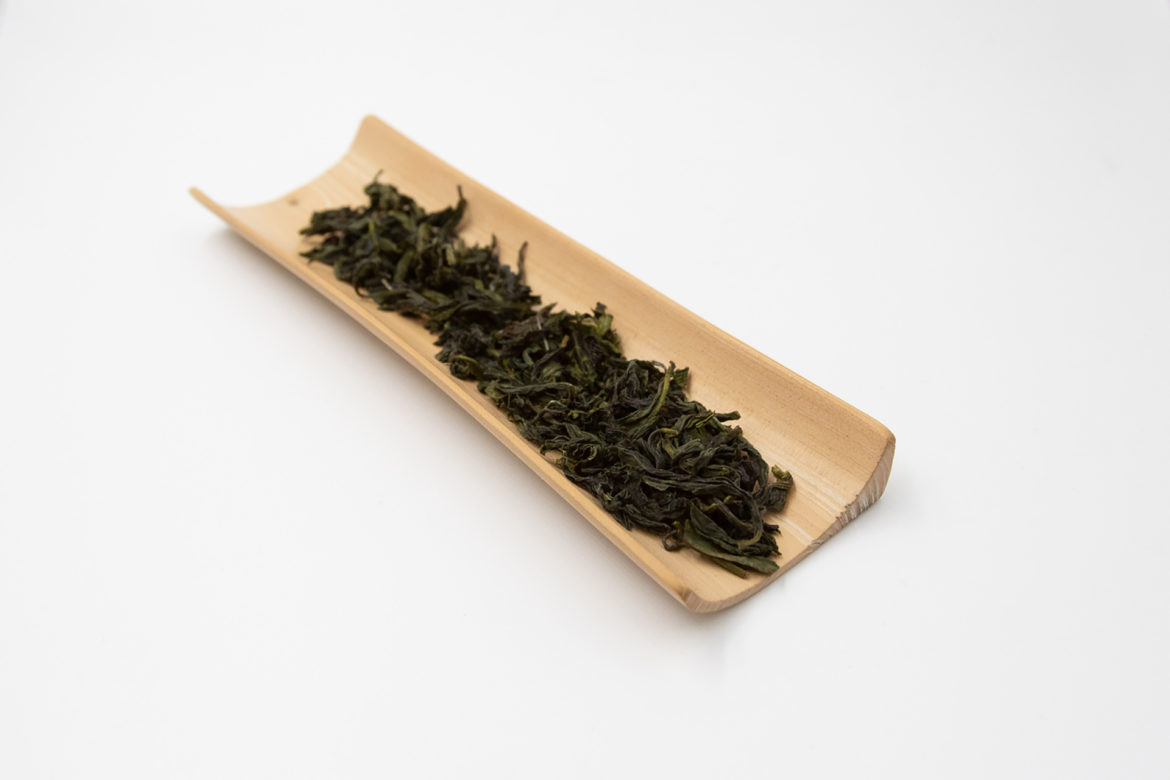
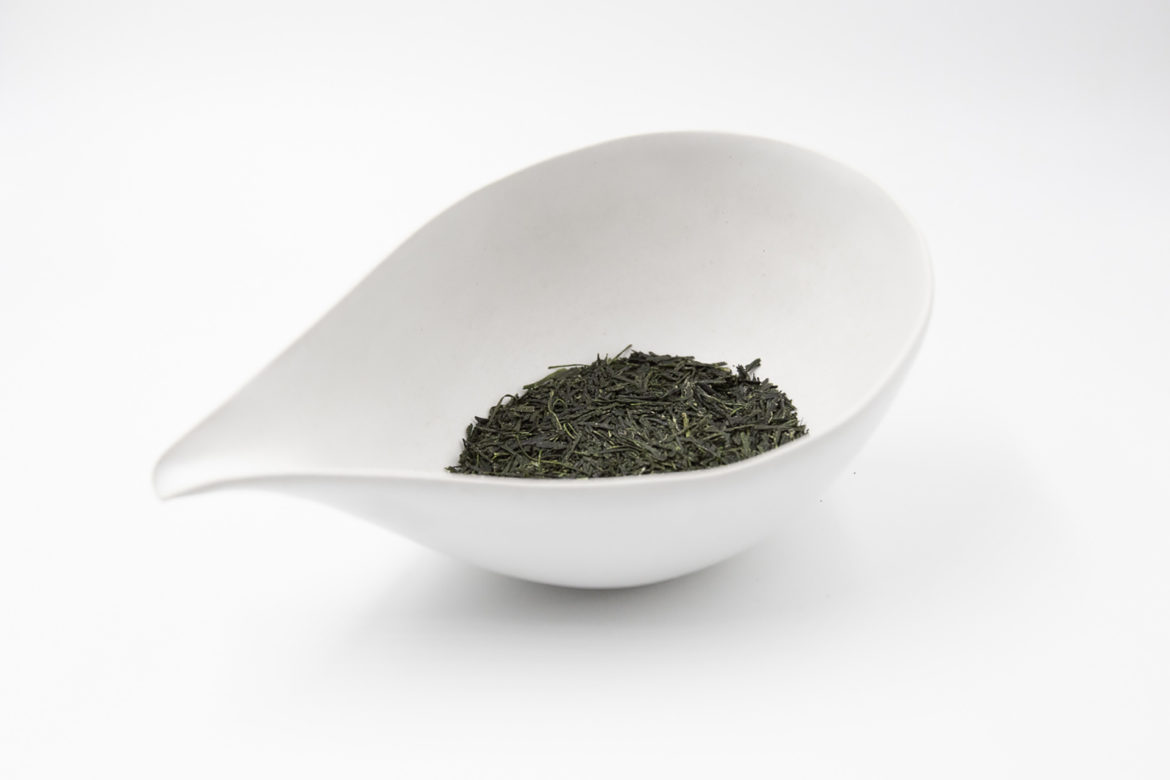
Wenshan Bao Zhong displayed in tea scoop by Ondrej Sedlak. Photo by Anthony Jordan III.

Tillerman Tea

Based out of Napa, California, founder and lifelong tea nerd David Campbell runs an online shop dedicated to the many oolong teas of Taiwan. Tillerman’s focus is narrow—around 20 teas in the collection at any given tea—but that scope allows for exemplary representation and high-quality teas from across the island. Tillerman ships direct from Napa, meaning orders placed in the United States show up in around two days. There’s not a lot of hype around these guys but the tea just glows.

Recommended tea: Wenshan Bao Zhong, a dark green, dry style of tea that is just barely oxidized, walking the line between what most tea drinkers recognize as “green tea” and classic oolong. This tea just goes and goes, with layered complexity through a dozen steeps or more.

tea buying guide

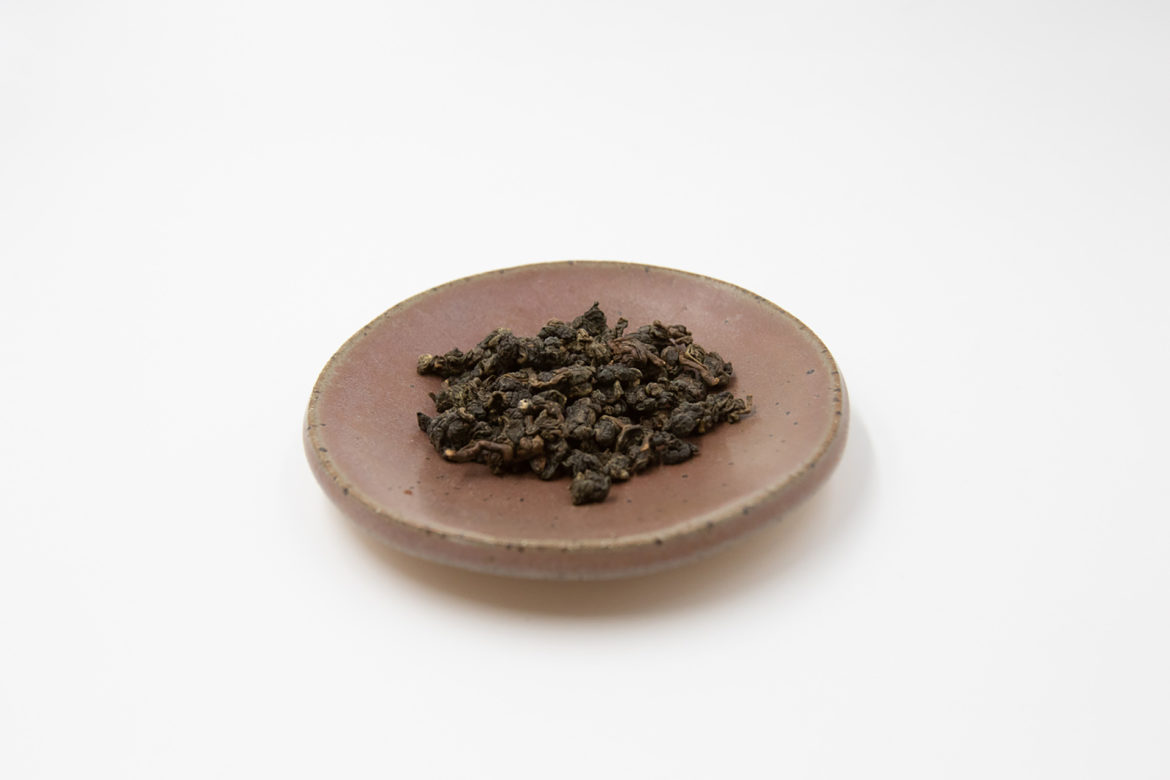
Chacoal Roasted Dong Ding displayed on small plate by The Great Escape Studio. Photo by Anthony Jordan III.

Floating Leaves

Seattle’s Floating Leaves focuses on nothing but the teas of Taiwan, with a range of offerings both fresh (2018 Fragrant Dong Ding, harvested just months ago) to vintage (like this Johnson Administration-era Beipu). From inside the company’s working offices/tea tasting room in Ballard, Floating Leaves are shipping out some of the most beautiful charcoal roasted oolong teas I’ve ever tasted, with a focus on offerings from individual roast masters and tiny prized plots. Founder Shiuwen Tai has also got the market cornered on video education, commissioning original films at tea origin and hosting regular online tea brewing meet-ups.

Recommended tea: Floating Leaves are increasingly my go-to tea for serving guests—these are light-switch “oh shit” blow-your-mind teas, complex and fragrant and so very obviously at a different level of quality and intentionality than the teas most people grow up drinking in America. If I had to pick one it would be the Charcoal Dong Ding, roasted by Master Zhang in Nantou County, Taiwan. This tea is just, wow, so full of life and character, with the most wonderful clarity and energy—a masterclass on the subtle art of roasting in the tea world, to which coffee lovers can certainly relate and revel in.

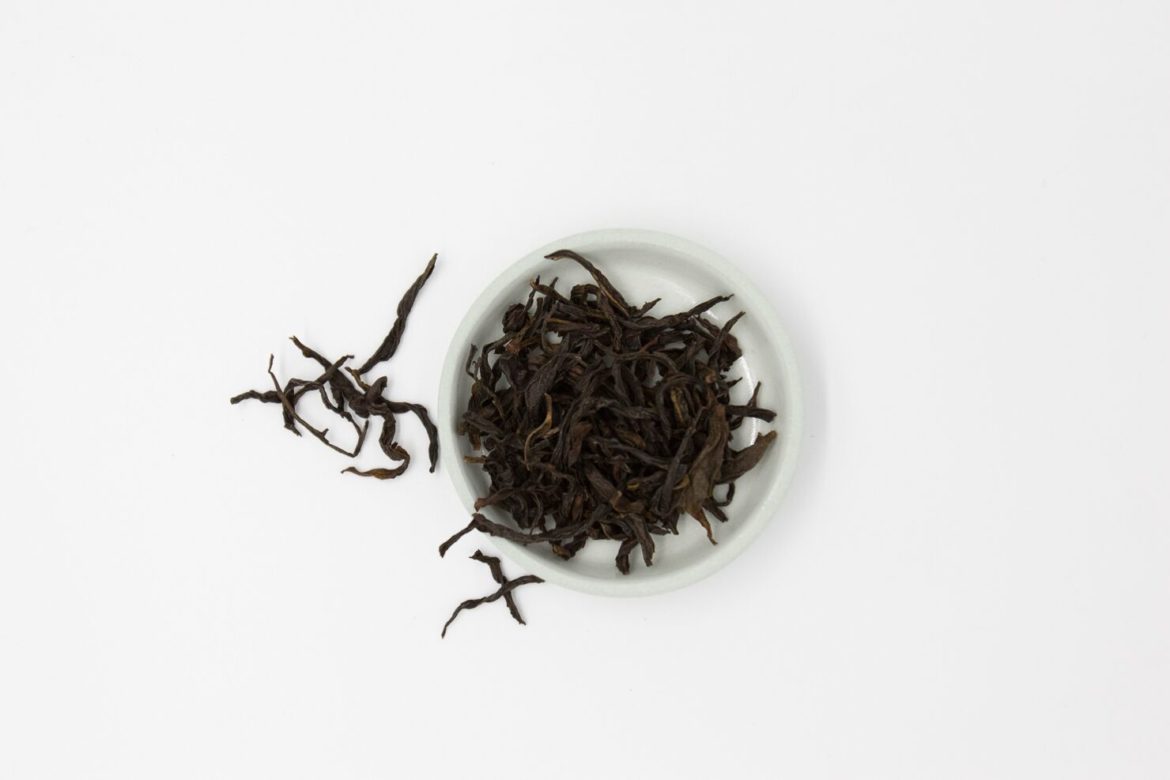
Wudong Mountain Dancong displayed on . Photo by Anthony Jordan III.

The Tea PL

There is a huge scene for tea in Eastern Europe, and many talented emerging ceramicists and intriguing tea brands are based there. Having dipped my toe in just a bit, I’ve come away really impressed by the offerings from Wojciech Wozniak and the team at The Tea PL, based in Lodz. Their webshop is kind of an entry point to the rabbit hole of aged tea, including a number of Hong Kong and Taiwan stored Yunnan teas from the 80s and 90s, but also a number of exemplarily sourced teas from Eastern China and Taiwan. I highly recommend checking out this brand’s monthly tea club as a way to get started and learn more about their approach. The Tea PL kind of reminds me of a wine shop that has all the good shit—you might not be familiar with it all, but shopping there you know you’re in good hands.

Recommended tea: This endlessly giving craveable, village-and-variety-specific Wudong Mountain Dancong. The village (Li Zai Ping) and the bush variety (Mi Lan Xiang) are both highly revered and sought after. In the cup, served gong fu cha style, there is plush sexy fruit for days, oranges and mangoes and yellow plums. This tea also puts me in a really lovely headspace (not dissimilar from a good sativa, frankly) and is ideal for sharing with a friend or partner and letting the conversation flow.


Down The Rabbit Hole

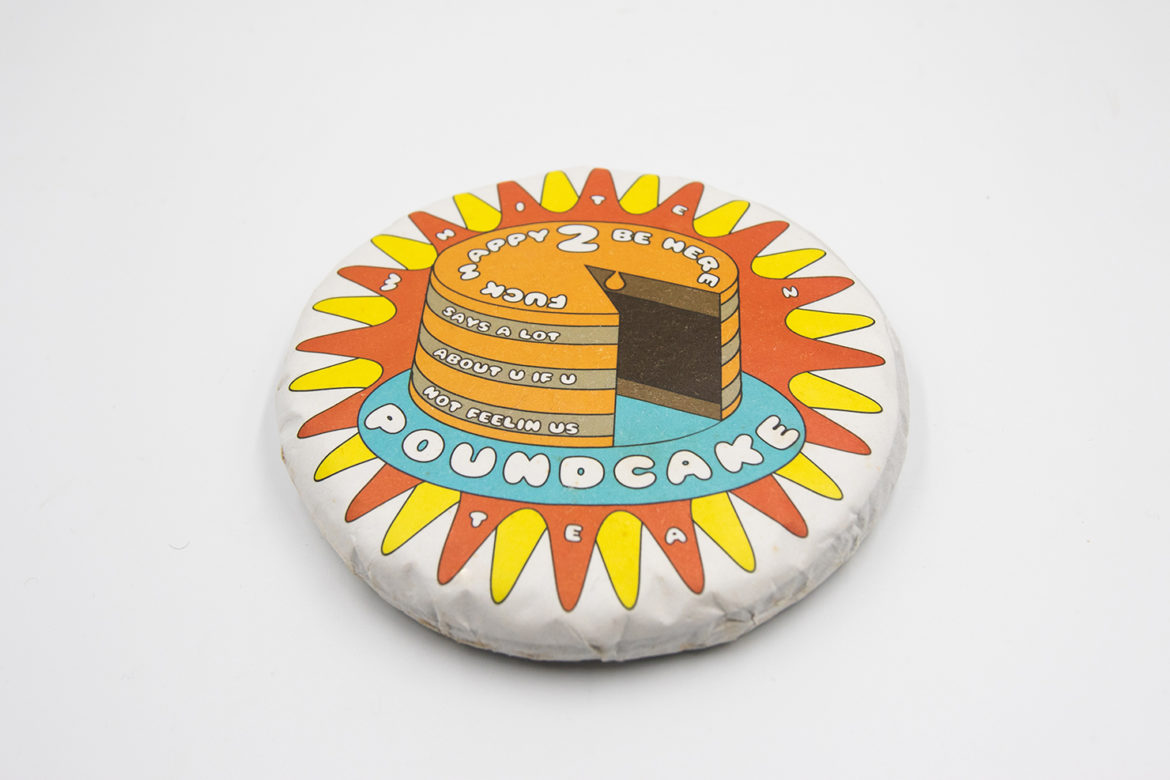
2018 Poundcake blend. Photo by Anthony Jordan III.

White 2 Tea

If Hanon or Patta or any of the other big international streetwear brands were a tea company, they would be White 2 Tea. Their approach to branding and marketing feels utterly of the moment, from flash sales and Instagram deals to eye-catching packaging and artist collaborations, all of it shot through with a sense of humor and playfulness that feels utterly refreshing not just in tea, but for beverage culture in general. (For more, see our coverage on tea branding.) This is the brand whose tea cake wraps I would most like to wear on a hoodie, and the end products—the result of careful blending managed at origin, in China—have been some of the most delicious stuff I’ve sampled in the last six months of research.

February 2019 White2Tea Club cake. Photo by Anthony Jordan III.

Recommended tea: It sounds like a cop-out but White2Tea’s tea club is some of the most fun I’ve had receiving tea through mail. Every month it’s a different look: a set of a half-dozen samples of yancharock teas; a special edition tea cake pressed with naughty Santa Claus art for Christmas; exclusives, rarities, and discounts galore. For $30 a month it’s a steal—I wish coffee had an equivalent grab bag subscription service with as much personality, variation, and playfulness as this one. But if you have to order something straight up right now, and don’t want to trust the club just yet, start with a matching set of Flapjacks Raw and Flapjacks Ripe—travel-ready mini pucks of packed pu’er, each weighing exactly eight grams, ready to toss in your bag on the go. 


Bitterleaf

Bitterleaf offers a couple of things that help them stand out in the market: a smart, collab-heavy approach to tea cake packaging design; a deep bench of ceramics and teawares at a range of price points; and a consumer-friendly “Tea Miles” program that functions kind of like frequent flier miles at your favorite airline. The more you spend (and refer), the more points you get in the program, redeemable across Bitterleaf’s range of products. With 60+ pu’er offerings alone—from Myanmar grown tea cubes to mandarins stuffed with shou—there is something for everyone, and to boggle every mind.

Recommended tea: Year of the Dog 2018 is a raw—unprocessed—pu’er from the Yiwu village in Yunnan. “Raw” teas from this part of China are really like their whole own product category—I have heard them described alternately as “rocket fuel,” “the crack cocaine of tea,” “the stuff of life,” and “the only thing I drink” by various people over the last few months. It’s not for everyone, and your mileage may vary, but for those wanting to dip their toe, this offering from Bitterleaf is a really consumer-friendly place to start. Not too astringent, not too meth-y, not too much like you need to see a therapist after sessioning, but just enough of these things to let you know that yes, you are drinking young raw pu’er and yes, it is going to fuck you up in a hopefully interesting way.

2018 “Prescription Only” Raw Pu’er. Photo by Anthony Jordan III.

Kuura

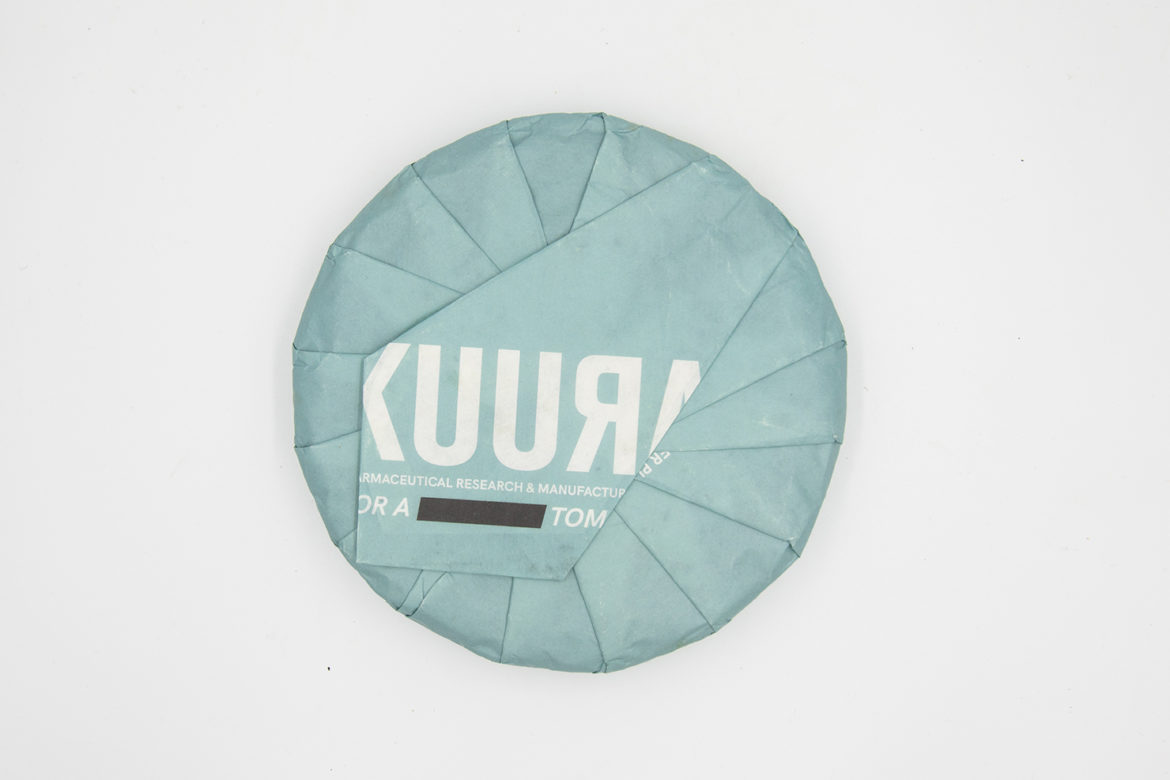
Really stunning design and teas to match out of Melbourne’s Kuura, fusing a kind of techno-futurist Blade Runner design scheme with detached commercial Instagram irony via Flinders Lane. The focus here is mostly Yunnan teas, packaged in eye-catching original teacake designs and paired with some super smart kit—think a stunning all-black faceted gaiwan, or this brutal looking industrial tea knife. Offerings from Kuura cycle quite often (this is a good sign) so keep your eyes peeled for new drops, and definitely follow them on Instagram.

Recommended tea:I have been very happily drinking my way through Kuura’s 2011 “Lolly Water,” an aged white tea from Fujian. As an everyday drinker it’s stunning, with heaps of energy and this burnt wood, palo santo thing on the nose that makes you want to keep brewing.

tea buying guide

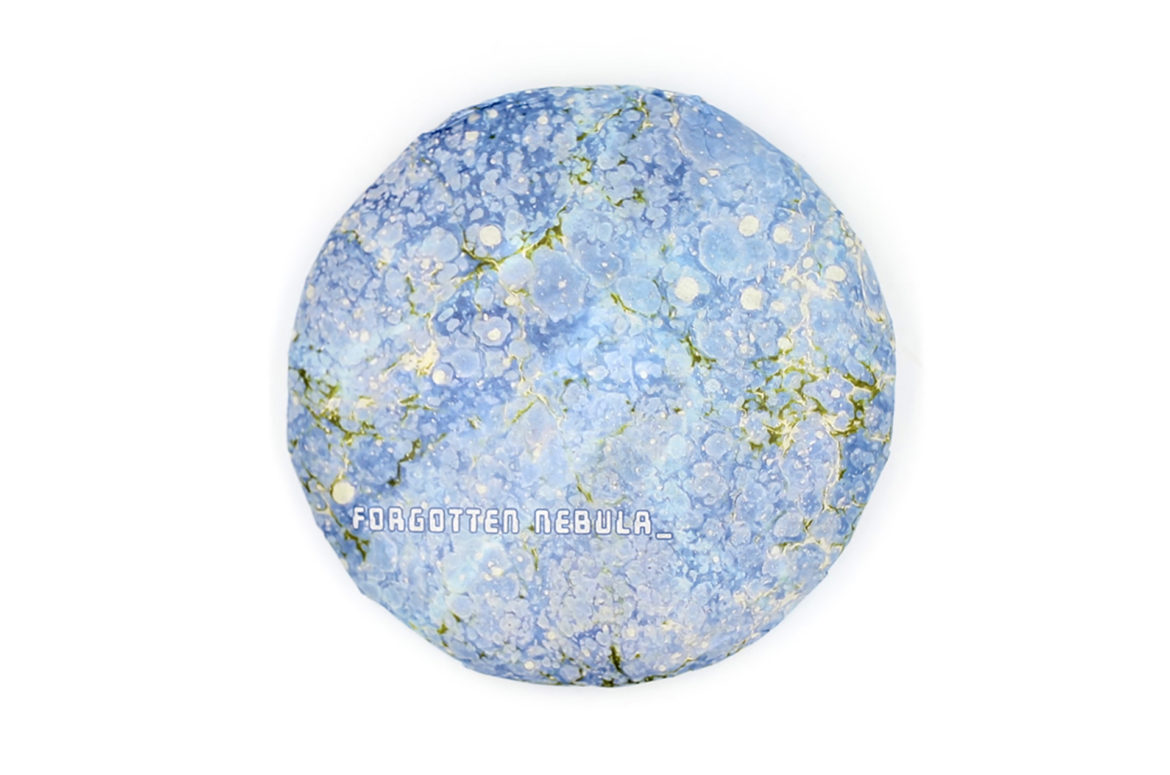
Forgotten Nebula. Photo by Zachary Carlsen.

Crimson Lotus

Husband and wife team Glen Bowers and Dawa Lamu work together as Crimson Lotus Tea, a brand with one foot in the Pacific Northwest and the other firmly planted in Lamu’s home province of Yunnan, China. Here the focus is on Yunnan teas and nothing but, though please don’t confuse that for a limited selection—Crimson Lotus offer a stunning array of village specific teas from across the region, exemplifying every cup profile and production style, paired with an assortment of expertly sourced teawares and tea tools. Their website is a deep resource of knowledge on the teas and culture of Yunnan, best perused over multiple steeps of shou, then sheng, then more shou (or whatever order you prefer).

Recommended tea: Where do I even start? Shou processed pu’er is treated with a lot of intentionality and respect by Crimson Lotus, and so you might check out their “That’s No Moon” 2015 (designed to look like the Death Star!) or a nice entry-level cake like “Simple Shou” (at a great starter price).

tea buying guide

2009 Tieluohan in small tea pot by Crimson Lotus. Photo by Anthony Jordan III.

Wuyi Origin

Cindy Chen’s Wuyi Origin in Wuyishan, China offers a very unique proposition for tea drinkers: the opportunity to order tea direct from the producer. Chen’s focus is on yancha, or “rock tea,” a style of oxidized oolong named for the cliffs and mountainsides from which it is harvested. She and her husband Zhou Chen are multi-generational tea farmers, now wholesaling their tea worldwide thanks to the magic of global commerce, specifically the China Post, whose 2011 agreement with the USPS helped revolutionize how tea gets from China to the United States.

Recommended tea: Wuyi Origin offer a range of yancha, including both aged and new harvest, in sought after styles including Rougui (“Cinnamon”), Shui Xian (“Water Immortal”), and Qi Lan (“Strange Orchid”). I’ve been happily drinking a 2009 aged Tieluohan, a heavily roasted tea with big bold flavors of cherry syrup and herbs. Think medicinal in a good way.

Another Planet

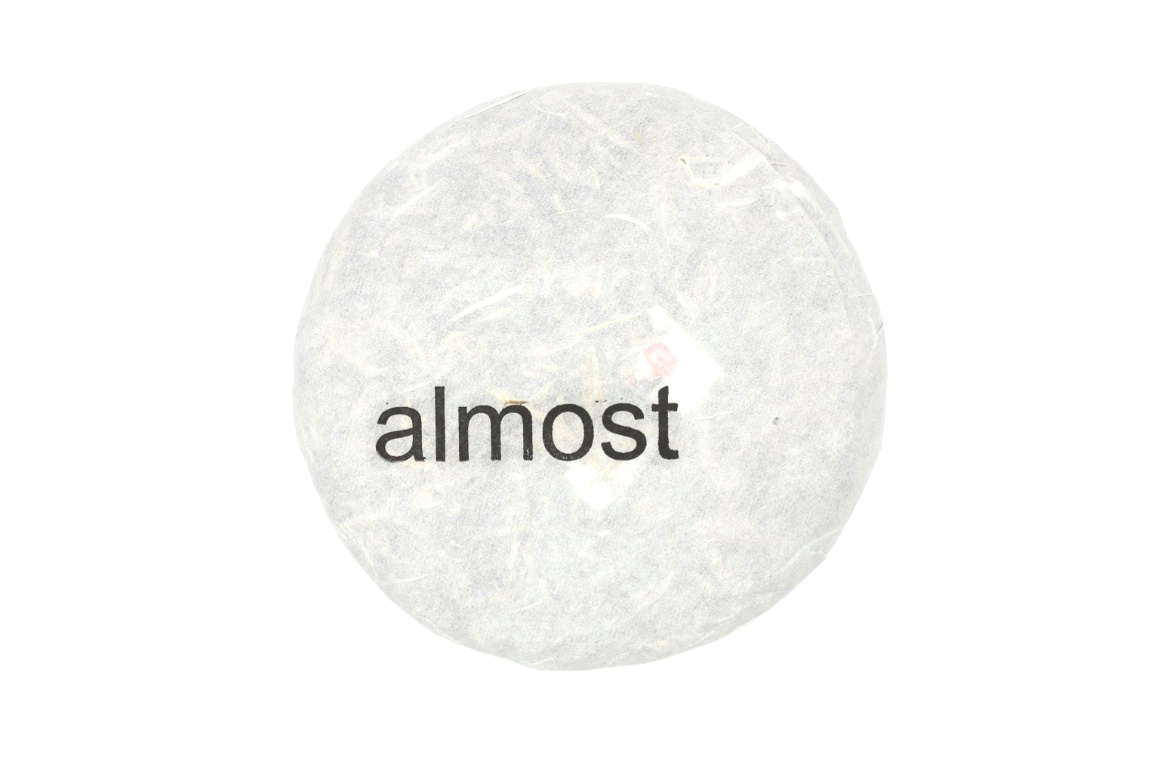
Almost teacake. Photo by Zachary Carlsen.

Liquid Proust

I caution to go too deep here—this is for true heads only, and represents the very deep end of where the new generation of tea culture in America may someday lead, fueled by unprecedented access across a vast ocean and the immediacy of Instagram. Go follow @liquidproust and check out his website if you want to get involved. Have patience and you will be rewarded. I’ve said too much already, lest this blow up and I get shut out of his next aged oolong drop.

Recommended tea: Start with a sampler—his Winter 2018 set is still available as of press time—then follow along on IG for limited edition releases.

tea buying guide

Ogura Gyokuro displayed in gongdaobei by Masanobu Ando. Photo by Anthony Jordan III.

Kettl

Japanese tea gets kind of looked down upon by the gushu geeks and oolong owls, for reasons I’m not totally sure I understand—some kind of bias against steamed tea, maybe, or lack of access to the really good stuff. Kettl, friends, is undoubtedly the really good stuff, a direct source operation with offices in Fukuoka and Brooklyn, focused on the very highest quality Japanese tea available in the United States. Kettl buys direct and ships from Japan in eye-catching packaging, offering an array of truly stunning (and rightly expensive) gyokuro, sencha, matcha, and hōjicha. Kettl’s list of partners should help put the brand in context: from Jean-Georges to Gjusta, Momofuku to Mission Chinese, Konbi to The French Laundry to Sushi Noz, there may be no more high profile emerging tea brand in America right now than Kettl.

tea buying guide

Kin Hōjicha by Kettl x Ryuouen. Photo by Anthony Jordan III.

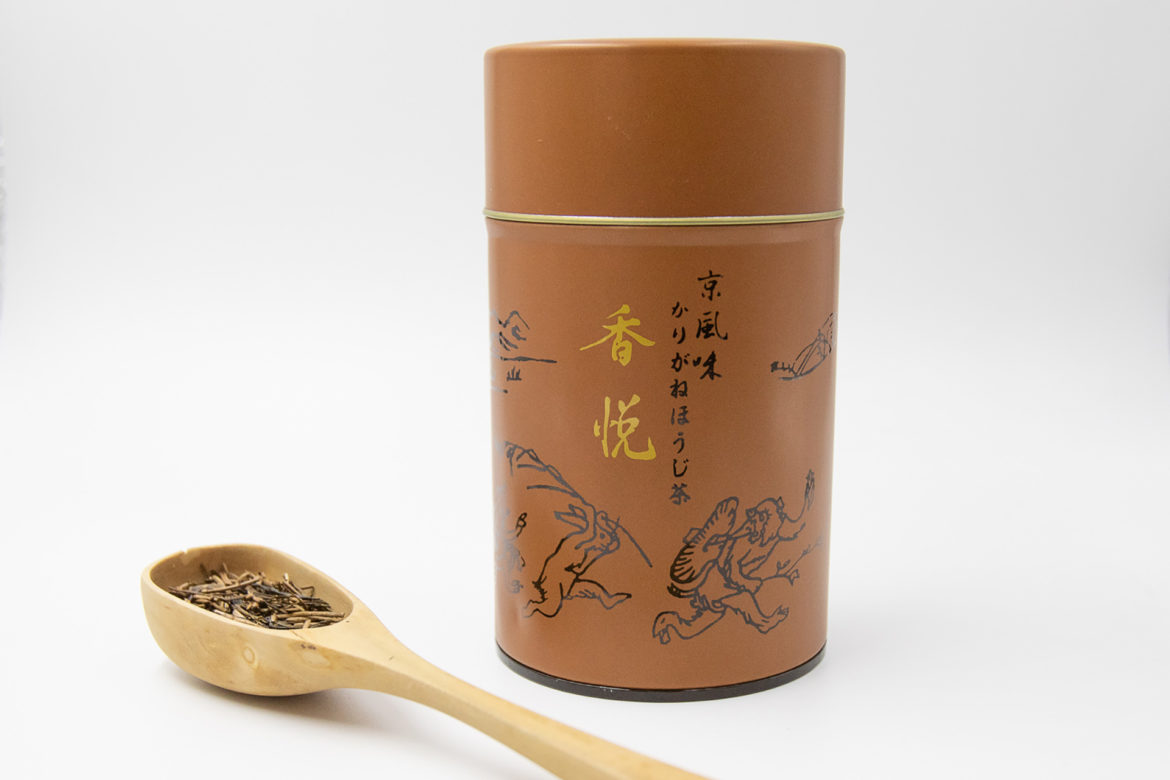
Recommended tea: All recommendations are personal, and for a brand like Kettl that means truly drilling down to what you like, and what you use tea for in your life. For some that’s matcha; others are chasing higher and higher grades of gyokuro. For me, I love—and I mean love—the roasty toasty feather-light range of hōjicha teas carried by Kettle, especially this Kin Hōjicha, sourced in partnership with famed Kyōto tea purveyors Ryuouen. These teas are low on caffeine, big on umami, and perfect with dessert or after the end of a long multi-tea session. Very strongly recommended.

tea buying guide

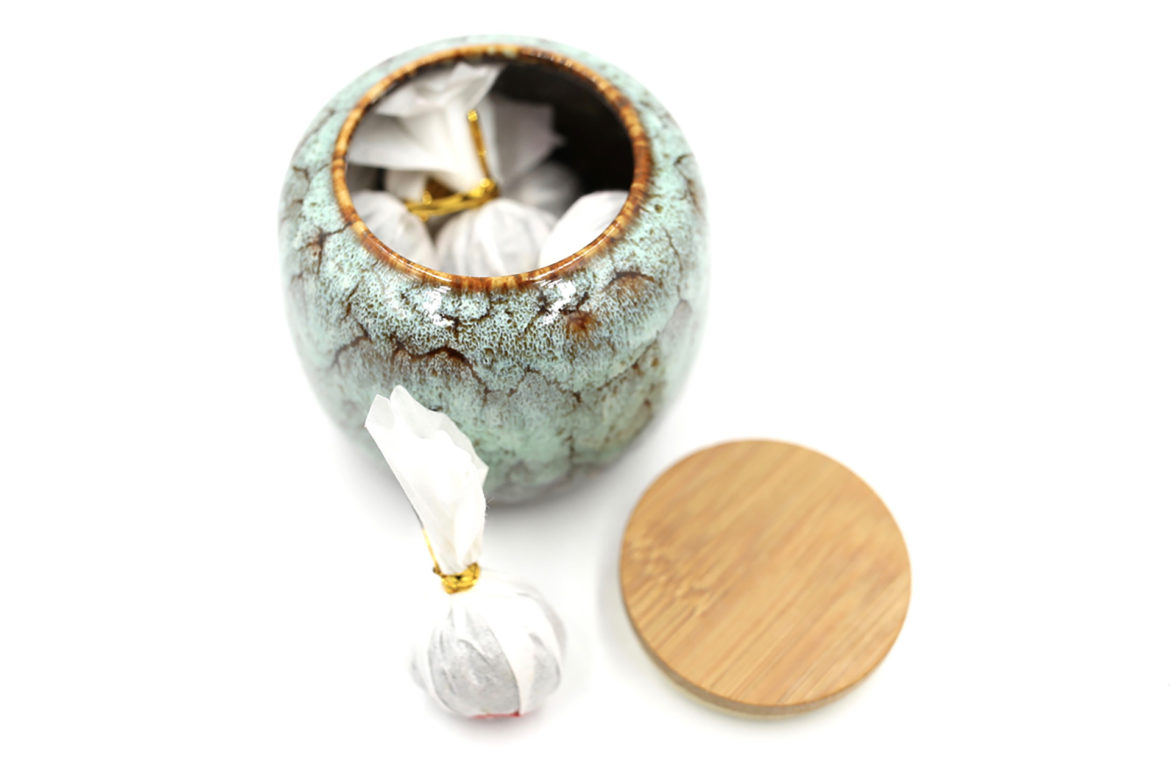
“Dragon Ball” tea caddy. Photo by Zachary Carlsen.

Yunnan Sourcing

An almost impossibly vast world of Yunnan teas, delivered to your door—the beautiful, the divine, the stuff that makes you feel like you’re riding shotgun with Wayne Brady. Yunnan Sourcing is Yunnan tea at its psychotropic excess, plus so, so much more from across China and Taiwan, alongside an endless scroll of teawares and gear. This website probably has 1000+ SKUs. You could drink nothing but Yunnan Sourcing tea for the rest of your life and still not touch bottom. They are perhaps a metaphor for tea itself—unknowably deep, never-ending, a lifelong series of clicks and more clicks and boxes upon boxes at your front door, never conquered or fully understood.

Recommended tea: Within the vastness, a personal discovery—this lovely collection of “Dragon Ball” style teas, hand-rolled by the founder of Yunnan Sourcing’s in-laws. I keep one of these in my bag at all times in case tea is called for in a less-than-prepared situation, and I love drinking something with that personal connection to the family behind the brand.

Jordan Michelman (@suitcasewine) is a co-founder and editor at Sprudge Media Network. Read more Jordan Michelman on Sprudge.

Editor: Scott Norton.

Photos by Zachary Carlsen and Anthony Jordan III for Sprudge Media Network. 

Breville Logo

Sprudge Tea Week is presented by Breville USA.

The post The 2019 Sprudge Guide To Buying Tea Online appeared first on Sprudge.


from Sprudge https://ift.tt/2EzcM2C

Friday, March 1, 2019

Coffee & Print? Yes Plz, Coming To LA Stockists Next Week

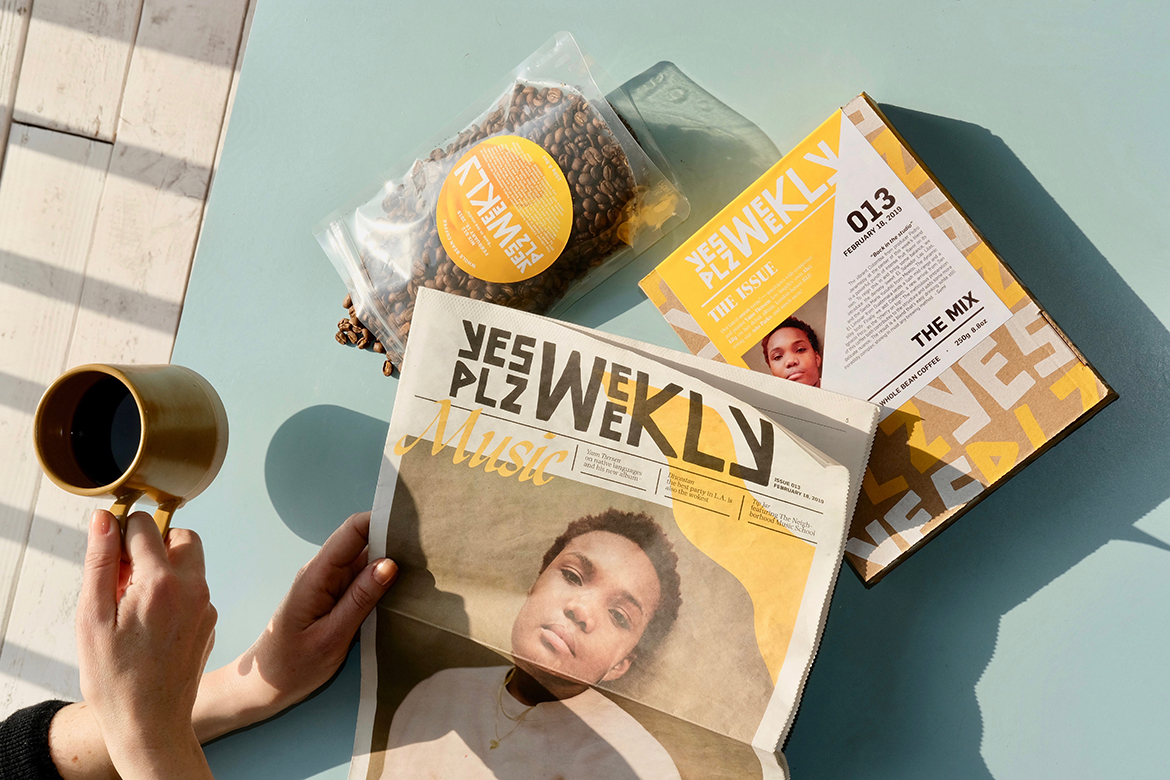
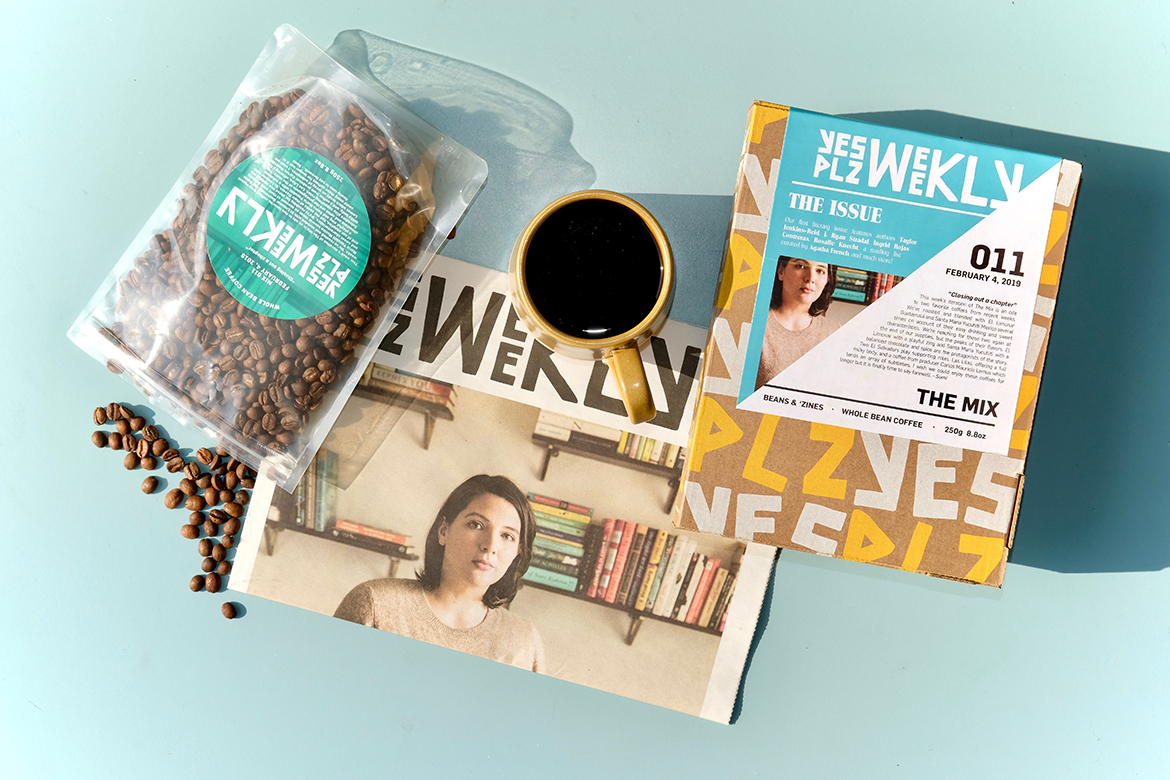
After a successful Kickstarter campaign and the subsequent addition of print into their weekly subscription service, Los Angeles-based Yes Plz is expanding. Now, those looking to enjoy the combination an ever-changing coffee blend and weekly zine from Tony “Tonx” Konecny and Sumi Ali need not wait for it to be delivered to their doorsteps. In a Sprudge exclusive, Yes Plz has announced their brand new stockist program. Starting Monday, March 4th, consumers will be able to find the weekly box set at book and periodical shops and cafes around LA.

Like with the subscription, each Yes Plz box found at a stockist comes with a 12-ounce bag of The Mix, a weekly-changing, “ever-evolving blend” per the website—currently The Mix consists of coffee from San Ignacio Peru, Uganda, and the El Limonar from Guatemala, but Ali tells Sprudge that blend will change next week to include an Ethiopian coffee sourced through Collaborative Coffee Source and two Central American coffees—and Yes Plz Weekly, the brand’s accompanying print mag covering an eclectic mix of topics. Previous topics have ranged from dance to the postal service, bees to dating in the digital age in the soon-to-be-released Issue 015, which includes an interview with writer/filmmaker Nancy Jo Sales, whose HBO documentary Swiped “investigates the dark side of the mobile dating trend,” as well as “[taking] up the cause of the star-crossed would-be lover with some Missed Connections.”

Konecny tells Sprudge that the plan with Yes Plz was always to break out of the subscription-only model, but they needed time “kick the tires.”

The beans and ‘zines combo is a little unusual and I think people are immediately intrigued by it or drawn to it when you hand them a box—whereas with merchandizing stuff on the web, you’re always pushed to center the value proposition around getting coffee sent by mail, framing it around “solving a problem” for the customer. We don’t want to limit ourselves only to people who’ve bought into the utility having a coffee subscription.
It’s hard to grasp what we’re doing with this crazy print magazine thing without holding one in your hands. And then people can’t believe we’re doing it every single week!

For the initial brick-and-mortar release, Yes Plz will be available at Dayglow Coffee, Dinosaur, Kindness & Mischief, Cafe Dulce, and WoodCat as well as Now Serving book shop. More stockists will be announced in the coming weeks, and Konecny states that Yes Plz is looking to expand outside of the LA area, assuming the right partners come along. Any interested stockists can inquire about carrying Yes Plz via email at stockists@yesplz.coffee.

Zac Cadwalader is the managing editor at Sprudge Media Network and a staff writer based in Dallas. Read more Zac Cadwalader on Sprudge.

Images via Yes Plz

The post Coffee & Print? Yes Plz, Coming To LA Stockists Next Week appeared first on Sprudge.


from Sprudge https://ift.tt/2SBlhPT

The Golden Hour


We didn't see any owls but....


from Northview Diary https://ift.tt/2GVkM1y